


Introduction to Putty Knives
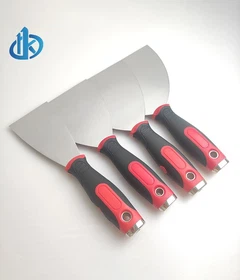
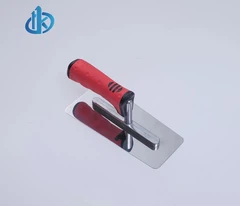
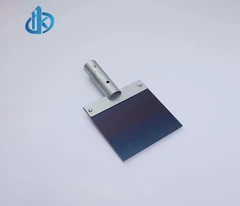
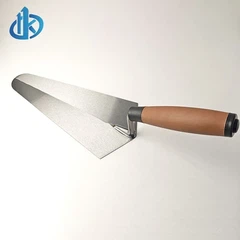
Putty knives are common hand tools, mainly consisting of two parts: the blade and the handle. The blade is usually made of stainless steel or carbon steel, possessing certain toughness and hardness, and can easily handle various tasks such as scraping, cleaning, smearing, and filling. The handle is mostly made of plastic, rubber, or wood materials.
Basic Components
Blade
Material: Stainless steel blades are corrosion - resistant and suitable for use in relatively humid environments; carbon steel blades have higher hardness and stronger cutting and scraping capabilities. The blade can be processed with different techniques according to customer requirements, such as mirror polishing.
Flexibility: The front end or the middle of the blade is thinner, endowing it with functional flexibility, facilitating its adhesion to the material surface or operation in corners and gaps.
Design: The blade design can be customized into different thicknesses, sizes, or multifunctional styles according to user needs.

Handle
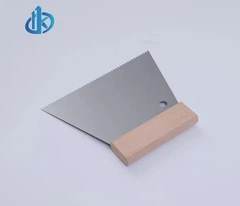
Material: Plastic handles have a lower cost and a variety of colors; rubber handles have better anti - slip properties; wooden handles give a traditional and good - textured feeling. There are also handles made of a composite of plastic and rubber, combining the advantages of both.
Design: The handle usually has a hanging hole for convenient tool storage and hanging. The shape is mostly streamlined, conforming to the natural shape of the hand grip. In addition, the handle can also be customized according to user requirements, such as whether to have a tail nail or a LOGO mark.

Application Range
Putty knives are widely used in building decoration and many other fields, mainly in the following aspects:
Wall Treatment
Including: applying putty, leveling joint fillers, scraping off wall coatings, leveling the base layer of the wall, removing old paint, removing dirt, and cleaning window and door frames.
Woodworking Operations
Including: removing burrs on the surface of wood, cleaning wood chips, vehicle maintenance and repair, removing old sealants, and cleaning car body stickers.
Art Creation and Handicraft Making
Art Creation and Handicraft Making
Pipeline Maintenance
Cleaning pipeline joints, applying sealing materials, etc.
Glass Installation and Maintenance
Including: cleaning glass glue, applying glass glue, etc.
Furniture Restoration and Renovation
Including: removing old paint layers, filling gaps in furniture, etc.
Gardening Work
Including: cleaning flowerpots, pruning plant roots, etc.
Metal Processing
Including: cleaning rust on the surface of metals, applying protective materials, etc.
Classification of Putty Knives
By Blade Width
Commonly including regular sizes such as 1.25 inches, 1.5 inches, 2 inches, 2.5 inches, 3 inches, 3.5 inches, 4 inches, 5 inches, 6 inches, 8 inches, 10 inches, 12 inches, etc. Other sizes can also be customized according to customer requirements.
By Handle Material
Putty knives with plastic handles: They have a low cost and a rich variety of colors, suitable for general household and small decoration projects.
Putty knives with rubber handles: They have good anti-slip properties and are suitable for long-term use, such as by professional decorators.
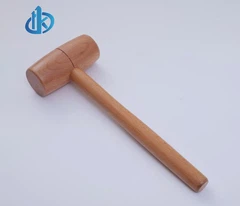
Putty knives with wood handles: They have a good texture and a relatively beautiful appearance, and are often used in occasions where there are requirements for the appearance of tools.
Other styles of handles can also be customized according to customer requirements.
Customer Customization Process of Putty Knives
|
Process |
Process Details |
|
Demand Communication |
Customers contact our company through telephone, email, or online customer service, and detail their requirements for the usage scenarios of putty knives, preferences for blade and handle materials, sizes, colors, and appearance designs. Our staff will communicate with customers in a timely manner and offer suggestions. |
|
Scheme Formulation |
After the requirements are clear, our design team will formulate a preliminary design scheme according to the requirements, combined with product functions and production processes. The scheme includes the size, material selection, function selection, and appearance design of the putty knife, and will communicate with the customer in a timely manner for confirmation. |
|
Customer Feedback |
The customer reviews the scheme. If they agree with the design scheme, our company will make samples. If not, both parties will continue to communicate and adjust the scheme until the customer is satisfied. |
|
Sample Confirmation and Business Negotiation |
After making the samples, our company will conduct tests on blade hardness, handle grip and anti-slip performance, overall durability, etc., and send the samples to the customer. After the customer confirms the samples, both parties will negotiate on issues such as quotations, contracts, order quantities, packaging, LOGO, and outer boxes. |
|
Production and Delivery |
After both parties confirm all the details, our company will arrange production according to the sample standards. After production is completed, quality inspections will be carried out. Once qualified, the products will be packaged and delivered to the customer as agreed. |