
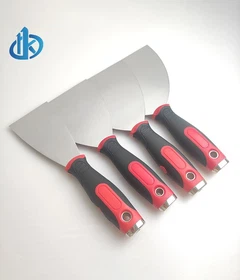
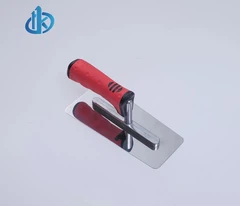
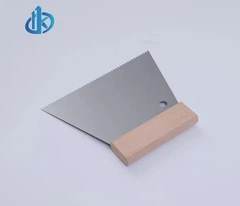
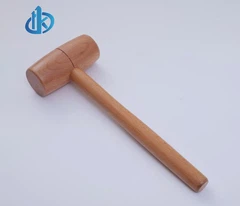
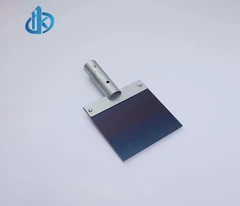

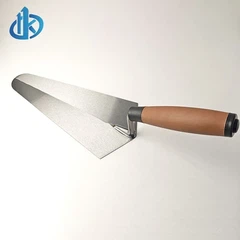


What is Drywall Knife
A Drywall Knife is a hand-held tool that is used for removing old paint, rust, and other substances from surfaces. It typically consists of a metal blade attached to a handle, and is designed to be used in a scraping motion to remove paint and rust from metal, wood, and other surfaces.Paint scrapers come in a variety of shapes and sizes, and can be used for a range of different tasks. Some are designed for removing paint from small, hard-to-reach areas, while others are designed for removing paint from large surfaces. Regardless of the size and design, paint scrapers are an essential tool for anyone who needs to remove old paint or rust from metal surfaces.
-
![12" Spackle Knife]() 12" Spackle KnifeThe strength of the 12" Spackle Knife is its efficiency. When you’re finishing drywall or smoothing plaster, fewer strokes mean fewer imperfections. That doesn’t just save time — it also reduces...view more
12" Spackle KnifeThe strength of the 12" Spackle Knife is its efficiency. When you’re finishing drywall or smoothing plaster, fewer strokes mean fewer imperfections. That doesn’t just save time — it also reduces...view more -
![6 Inch Filling Knife]() 6 Inch Filling KnifeOur 6 Inch Filling Knife comes from Hanke Hand Tools, based in Linyi, Shandong. We’ve been producing putty knives, plastering trowels, scrapers, taping knives, and wooden mallets for years. With...view more
6 Inch Filling KnifeOur 6 Inch Filling Knife comes from Hanke Hand Tools, based in Linyi, Shandong. We’ve been producing putty knives, plastering trowels, scrapers, taping knives, and wooden mallets for years. With...view more -
![Disposable Putty Knife]() Disposable Putty KnifeThink about scraping off old caulk, spreading glue, or mixing small amounts of filler. With a Disposable Putty Knife, you don’t worry about cleaning every last bit afterward.view more
Disposable Putty KnifeThink about scraping off old caulk, spreading glue, or mixing small amounts of filler. With a Disposable Putty Knife, you don’t worry about cleaning every last bit afterward.view more
Just use... -
![Corner Filling Knife]() Corner Filling KnifeA well-designed Corner Filling Knife means less sanding afterward—and anyone who’s spent hours sanding corners knows how valuable that is. Pair that with durable blades and solid handles, and...view more
Corner Filling KnifeA well-designed Corner Filling Knife means less sanding afterward—and anyone who’s spent hours sanding corners knows how valuable that is. Pair that with durable blades and solid handles, and...view more -
![Drywall Finishing Tools]() Drywall Finishing ToolsWith over 30 years of expertise, Hanke Tools has grown from traditional putty knives to modern precision tools, now trusted in more than 80 countries and regions worldwide.view more
Drywall Finishing ToolsWith over 30 years of expertise, Hanke Tools has grown from traditional putty knives to modern precision tools, now trusted in more than 80 countries and regions worldwide.view more
To meet the... -
![Drywall Hand Tools]() Drywall Hand ToolsFor three decades, Linyi Hanke Tools has dedicated itself to crafting hand tools, evolving from basic putty knives to a full range of specialized instruments now trusted in over fifty...view more
Drywall Hand ToolsFor three decades, Linyi Hanke Tools has dedicated itself to crafting hand tools, evolving from basic putty knives to a full range of specialized instruments now trusted in over fifty...view more -
![Best Drywall Knives]() Best Drywall KnivesWith thirty years of specialized tool manufacturing, Linyi Hanke has evolved from traditional putty knives to supplying professional tools to clients in more than fifty countries.view more
Best Drywall KnivesWith thirty years of specialized tool manufacturing, Linyi Hanke has evolved from traditional putty knives to supplying professional tools to clients in more than fifty countries.view more
... -
![Professional Sheetrock Tools]() Professional Sheetrock ToolsWith three decades of industry expertise, Linyi Hanke Tools has evolved from basic putty knives to specialized tools now exported to over 40 countries.view more
Professional Sheetrock ToolsWith three decades of industry expertise, Linyi Hanke Tools has evolved from basic putty knives to specialized tools now exported to over 40 countries.view more
Designed specifically for drywall... -
![Mudding Knife]() Mudding KnifeProfessional Mudding Tool | Mudding Knife: Your Reliable Partner for Wall Finishing In the professional field of wall treatment, when construction precision and efficiency are crucial, experienced...view more
Mudding KnifeProfessional Mudding Tool | Mudding Knife: Your Reliable Partner for Wall Finishing In the professional field of wall treatment, when construction precision and efficiency are crucial, experienced...view more -
![Espatulas Sheetrock]() Espatulas SheetrockIn drywall installation and wall finishing, a reliable tool can significantly improve efficiency and workmanship.view more
Espatulas SheetrockIn drywall installation and wall finishing, a reliable tool can significantly improve efficiency and workmanship.view more
Leveraging nearly 30 years of manufacturing experience, Linyi Hanke... -
![Drywall Finish Tools]() Drywall Finish ToolsThis drywall finish tools combines a carbon steel blade, aluminum bar, and rubber-plastic handle, offering a lightweight yet durable design suitable for both small-scale home projects and...view more
Drywall Finish ToolsThis drywall finish tools combines a carbon steel blade, aluminum bar, and rubber-plastic handle, offering a lightweight yet durable design suitable for both small-scale home projects and...view more -
![Sheetrock Scraper]() Sheetrock ScraperHanke Tools, based in Linyi, has nearly 30 years of experience in hand tool manufacturing, accumulating extensive expertise in construction processes.view more
Sheetrock ScraperHanke Tools, based in Linyi, has nearly 30 years of experience in hand tool manufacturing, accumulating extensive expertise in construction processes.view more
From putty knives to mud trowels,...


Why Choose Us
Professional team
It has a professional development team, skilled workers and advanced production equipment, as well as a complete management system and strict quality control to meet customers' high standards.
Our certifications
The factory has BSCI and FSC certification, and the main markets for its products are North America, South America, Europe, Australia and other countries and regions.
Good service
High-quality after-sales service, tracking usage, and positive feedback. Rapid response within 24 hours.
Competitive price
We are very competitive in terms of quality, price, delivery time, etc.Good Quality + Factory Price + Quick Response + Reliable Service, is what we are trying best to offer you.
Benefits of Scraper
Convenient and easy to use
The scraper is a common and simple tool that is convenient to use in both home and work settings. Simply place the scraper on the surface to be cleaned and gently scrape to remove stains and residue easily. Using the scraper is very simple and does not require any additional training or instruction.
Efficient cleaning
A scraper is an efficient cleaning tool that can quickly remove stains and residue from different surfaces. Especially when cleaning surfaces that tend to accumulate dirt, such as windows, floors, walls, and stoves, using a scraper can get twice the result with half the effort, saving time and energy.
Will not damage the surface
The materials used in scrapers tend to be soft and smooth, such as rubber or silicone, so they can effectively remove stains and residue without causing damage to the surface. Compared to other cleaning tools like steel wool or metal brushes, using a scraper leaves fewer scratches and blemishes.
Types of Scraper
Flexible Carbon Steel Scraper
35cm-60cm flexible carbon steel scraper, used for a variety of projects, including drywall, putty, decals, wallpaper, plaster, baking, patting, patching, stucco and more.this flexible carbon steel scraper is made of high quality carbon steel, the tempered, premium carbon steel blade with aluminum backing plate is tapered and perfect for corner work. The blade surface is fine polished, that are rust-resistant, corrosion-resistant and easy clean-up.
Stiff Carbon Steel Scraper
High quality metal putty knife,stiff carbon steel scraper, wooden handle painting scraper, dry wall scraper, pastry scraper.this stiff carbon steel scraper is made of high quality carbon steel, surface is fine polished, that are rust-resistant, corrosion-resistant and easy clean-up. It need to be cleaned in time and kept dry during storage after using the putty knife scraper in order to make the blade has a longer life.
Wide Wallpaper Scraper
OEM design customer size stainless steel material with rubber handle, wide wallpaper scraper, filling knife painting shaving, taping knife construction tools.this wide wallpaper scraper is made of high quality stainless steel, surface is fine polished and is available in a variety of specifications. The blade with high temperature quenching treatment is rust-resistant, corrosion-resistant and easy clean-up.
Painting Carbon Steel Scraper
Painting Carbon Steel Scraper, putty knife scraper set, painting carbon steel scraper, soft grip handle tapered blade for wall decoration hand tools, used for surface cleaning, scraping loose paint.this painting carbon steel scraper is forced from high carbon steel which will not rust and deform, corrosion-resistant, durable, high hardness, flexible and long time using. The Carbon Steel scraper blade after been polished the surface smooth like a mirror and easy to clean up.
Application of Scraper
Use it to cut
The bench scraper's best-known purpose is cutting dough, whether it's puff pastry, pizza dough, or pie crust. Bakers swear by the scraper's ability to punch, cut and portion out sticky, wet dough—unlike a kitchen knife, these cutters won't stick to dough, and this way your fingers are kept clean. The scraper can also be used to divide up frozen butter, finely slice pastry, and eliminate the need to handle dough with hands, which may warm it up.
Use it to scrape
The scraper's thin, wide, sturdy blade is multi-functional: use it to lift up raw dough that has been cut into unique cookie shapes; scrape dried dough from work surfaces without worrying about scratching your counter; clear away caked-on flour in seconds. The thin edge can also be used to smooth out icing on the sides of cakes. Not a baker? Those who practice home butchery like using it to scrape their cutting board after dividing up different cuts of meat.
Use it to scoop chopped veggies (and more)
For recipes that require a good deal of chopping prep work—everything from stews to stir-fries—having the bench scraper on hand is invaluable. Transferring chopped and diced veggies, nuts and fruit from cutting board to pan or pot can be done quickly, easily and without the risk of dropping bits of food onto the ground (or leaving morsels behind). It's a task most home cooks accomplish using their chef's knife, but one that often prematurely dulls the knife blade as it scrapes across the cutting board. Using the pastry scraper keeps your knives sharp longer and transfers more quantity than a knife ever could.
Use it to measure
If you're in the market for a new pastry scraper, make sure to get one with a ruler etched onto the length of the blade. Bakers often use the ruler to ensure their pastry or dough is the right thickness before it goes into the pan. And if you're cutting up a log of cookie dough or something like cinnamon rolls, place the ruler along the side of the log, use a knife to score at even intervals, then use the scraper to cut the log up for perfect rolls. What's more, due to its shape, the scraper will store away in your kitchen drawers without taking up unnecessary space.
How to sharpen Scrapers
Preparing the edge
Before the burr comes the edge - which must be straight and at right angles and, above all, clean. The edge of the scraper is prepared with the aid of a fine flat file, if possible without a handle, which would simply get in the way. The file is taken over the edge first at an angle and then with straight strokes. If you are working on a used scraper with a blunt burr, first file the old burr away from the flat side. This really does matter! The old burr must be got rid of. The scraper should be clamped for the purpose - either in the workbench vise or another suitable one.
Making the burr
It is already possible to scrape and scratch with the scraper as is. However, fine shaving is not possible until you have given it a burr. Today there are round or triangular burnishers available. Which works better is difficult to say, and people's preferences tend to be a matter of habit. The triangular burnisher is used more in Germany but the Anglo-Saxons seem to prefer the round one. Whatever else, the burnisher must be harder than the material the scraper is made of.
Working with a scraper
You can very soon tell if you have done your sharpening properly. If all you produce when scraping hardwood such as beech is dust, the burr is blunt. A scraper should remove fine shavings. The scraper is drawn over the surface you are working on at an almost vertical angle. Hold it firmly, using both hands, and use your thumbs to push it into a slightly bowed shape. The greater the curve you attain, the more material you will remove. If the scraper has to be held at a very oblique angle in order to get any sort of purchase, the burr has been set at the wrong angle.
How to Choose Scraper


The size of the trowel
Scraper rely on two sizes of trowels for most plastering jobs. The smaller 11-inch trowel is easier to control and is perfect for beginners and DIY Scraper. Bigger plastering trowels that are 13 inches or longer cover a larger surface area and increase the speed and efficiency of the application. It is recommended that a plasterer should own one of each size for versatility. Nela trowels come in both sizes and are fabricated from a material that withstands warping.
The frequency of use
Beginners hesitate to invest in pricier trowel brands thinking that they will not use it often enough to justify the cost. Although the frequency of use is an important consideration, it is still not cost-effective to buy cheap trowels that will not result in a good finish. There are affordable Nela plastering trowels online that will not cost as much but guarantee good quality.
Blade material
Scraper have different opinions on which material makes the best trowel. Some Scraper prefer a carbon steel Nela plastering trowel because it lends a better finish and does not warp over time. On the other hand, some would recommend that stainless steel is a better option because it requires virtually no maintenance. Some trowel manufacturers have come up with trowels that do not flex and warp after several uses while maintaining rust-proof quality and lightness.
DIY or professional
Another point to consider is whether the trowel is intended for a DIY project or professional use. Professional Scraper need to invest in the best quality trowels available in the market to ensure durability and quality. For DIY projects, you can buy less expensive trowels that are still of good quality. You can even purchase pre-worn trowels online that adhere better to plaster material and are easier to control.
Process of Scraper
Place the two planes of the scraper on the side of the grinding wheel. At the beginning, it should first contact the edge of the grinding wheel, and then slow down Slowly lay it flat on the side and continuously move it back and forth to sharpen the blade, making both sides flat
There is no significant difference in thickness when viewed with the naked eye. Then roughly grind the top end face and place the top of the scraper on it Smooth left and right movement of the grinding wheel rim requires the end face to be perpendicular to the centerline of the blade. When grinding, the first step should be to Make contact with the grinding wheel at a certain angle, then gradually move it to the horizontal. If the grinding wheel is directly placed against the horizontal position,The triangular scraper needs to be bouncing and not easy to grind, and may even cause accidents.
Fix the roughly ground scraper on the slicer, and ensure the thickness of the slices during the slicing process And accuracy.
Place the sliced scraper into a quenching furnace for heating and cooling to increase its hardness and toughness Sex.
The quenched scraper needs to be tempered to eliminate the internal stress generated during the quenching process,Improve the stability and toughness of the scraper.
Put the tempered scraper into the grinding machine for grinding processing, making its surface smoother and smoother Smooth and clean.
After grinding, the scraper needs to be coated to improve its wear resistance and resistance Corrosiveness.

Clean
The scraper will be contaminated with various types of ink, powder and stains during use. If not cleaned in time, the service life of the scraper will be greatly shortened. When cleaning the scraper, you should first rinse the ink, powder and stains on the scraper with water, and then wipe off the moisture on the scraper with a soft rag.
Lubricating
Lubrication plays a vital role in the service life of the scraper. To ensure the smooth operation and effectiveness of the scraper, the scraper needs to be lubricated. Use oil-based lubricant to coat the slide rails and active parts of the scraper to keep them in good condition and extend the service life of the scraper.
Store
When the scraper is no longer in use, it should be stored in a dry, ventilated, oil-free and corrosive-free environment to avoid moisture and corrosion of the scraper.
Use
When using a scraper, place the scraper at an angle to avoid a 90-degree angle with the flat surface to avoid deformation or scratches.
Examine
Regularly check the use of the scraper. If serious wear or deformation is found, replace or repair the scraper in time to ensure its normal use.
Stay sharp
After the scraper is used for a period of time, the sharpness will gradually decrease, so it needs to be sharpened regularly to maintain the sharpness of the scraper and extend its service life.
Our Factory
Linyi Hanke Tools Co, Ltd.,located in Linyi, the largest hardware city in China. This is a professional manufacturer of building decoration tools, products cover putty tools, plaster tools, paint tools, wood tools and so on. The company covers an area of 18,000 square meters, more than 100 employees.The company has a professional development team, skilled workers and advanced production equipment, as well as perfect management system and strict quality control, to meet customers' high standards, high demand. The factory has BSCI and FSC certification, the main market of products are North America, South America, Europe, Australia and other countries and regions.
FAQ
As one of the leading scraper manufacturers in China, we warmly welcome you to wholesale cheap scraper from our factory. All custom made tools are with high quality and competitive price. Contact us for more details.


