
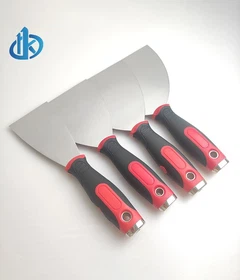
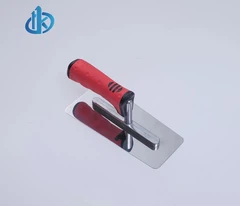
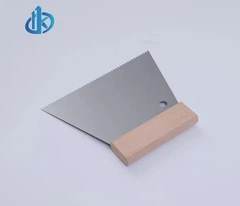
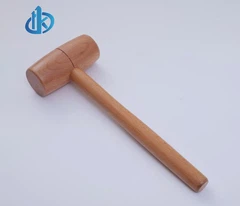
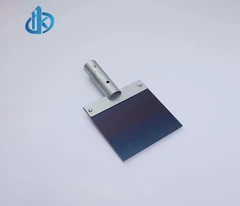

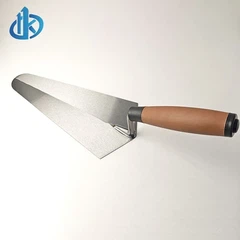


What is Stainless Steel Scraper
Stainless Steel Scraper is constructed by high stainless steel, flexible, smooth, strong and corrosion-resistant. Blade with mirror polished finish was designed for anti-rust and easy cleanup. The scraper is not easy to be broken, with long service life. Sharpened beveled edges is used for cutting and scraping dough, chopping and transferring vegetables.the handle of this stainless steel pastry bench scraper is ergonomic, anti-slip hard wooden grip that provides excellent comfortable when long time used.
-
![Corner Filling Knife]() Corner Filling KnifeA well-designed Corner Filling Knife means less sanding afterward—and anyone who’s spent hours sanding corners knows how valuable that is. Pair that with durable blades and solid handles, and...view more
Corner Filling KnifeA well-designed Corner Filling Knife means less sanding afterward—and anyone who’s spent hours sanding corners knows how valuable that is. Pair that with durable blades and solid handles, and...view more -
![Drywall Finishing Tools]() Drywall Finishing ToolsWith over 30 years of expertise, Hanke Tools has grown from traditional putty knives to modern precision tools, now trusted in more than 80 countries and regions worldwide.view more
Drywall Finishing ToolsWith over 30 years of expertise, Hanke Tools has grown from traditional putty knives to modern precision tools, now trusted in more than 80 countries and regions worldwide.view more
To meet the... -
![Taping Knife For Painting]() Taping Knife For PaintingWhen most people think of a taping knife, they think drywall.view more
Taping Knife For PaintingWhen most people think of a taping knife, they think drywall.view more
But a taping knife for painting can be a game-changer for surface prep, skim coating, or even applying decorative... -
![Taping Knife For Drywall]() Taping Knife For DrywallA taping knife for drywall is all about efficiency. The more you can do in one pass, the less you have to sand or touch up later.view more
Taping Knife For DrywallA taping knife for drywall is all about efficiency. The more you can do in one pass, the less you have to sand or touch up later.view more
And the smoother your first coat, the easier every... -
![Long Taping Knife]() Long Taping KnifeThe beauty of a long taping knife lies in its surface area.view more
Long Taping KnifeThe beauty of a long taping knife lies in its surface area.view more
One swipe covers way more ground than a standard knife, which means fewer passes, faster progress, and less fatigue.
It’s... -
![Drywall Taping Knives Stainless Steel]() Drywall Taping Knives Stainless SteelA good drywall taping knife stainless steel is worth every cent.view more
Drywall Taping Knives Stainless SteelA good drywall taping knife stainless steel is worth every cent.view more
It’s the tool that helps you finish faster, smoother, and with less cleanup. And that’s what a pro needs. -
![Drywall Knife Tools]() Drywall Knife ToolsThe beauty of the drywall knife tools is that it’s not just for pros.view more
Drywall Knife ToolsThe beauty of the drywall knife tools is that it’s not just for pros.view more
Even if you’re a weekend DIYer, the precision and balance help you get a finish that looks like you hired a... -
![Big Drywall Knife]() Big Drywall KnifeThe beauty of a big drywall knife lies in its surface area.view more
Big Drywall KnifeThe beauty of a big drywall knife lies in its surface area.view more
One swipe covers way more ground than a standard knife, which means fewer passes, faster progress, and less fatigue.
It’s... -
![Best Drywall Mud Knife]() Best Drywall Mud KnifeThe beauty of the best drywall mud knife is that it’s not just for pros.view more
Best Drywall Mud KnifeThe beauty of the best drywall mud knife is that it’s not just for pros.view more
Even if you’re a weekend DIYer, the precision and balance help you get a finish that looks like you hired a... -
![Best Drywall Finishing Knives]() Best Drywall Finishing KnivesThe beauty of the best drywall finishing knives are that it’s not just for pros.view more
Best Drywall Finishing KnivesThe beauty of the best drywall finishing knives are that it’s not just for pros.view more
Even if you’re a weekend DIYer, the precision and balance help you get a finish that looks like you... -
![Advance Taping Knife]() Advance Taping KnifeThe beauty of an advance taping knife is that it’s not just for pros.view more
Advance Taping KnifeThe beauty of an advance taping knife is that it’s not just for pros.view more
Even if you’re a weekend DIYer, the precision and balance help you get a finish that looks like you hired a... -
![Advance Drywall Knives]() Advance Drywall KnivesThe advance drywall Knife features a high-quality stainless steel blade that is corrosion-resistant and maintains sharpness for a long time, ensuring efficient operation.view more
Advance Drywall KnivesThe advance drywall Knife features a high-quality stainless steel blade that is corrosion-resistant and maintains sharpness for a long time, ensuring efficient operation.view more
The wide blade...


Why Choose Us
Professional team
It has a professional development team, skilled workers and advanced production equipment, as well as a complete management system and strict quality control to meet customers' high standards.
Our certifications
The factory has BSCI and FSC certification, and the main markets for its products are North America, South America, Europe, Australia and other countries and regions.
Good service
High-quality after-sales service, tracking usage, and positive feedback. Rapid response within 24 hours.
Competitive price
We are very competitive in terms of quality, price, delivery time, etc.Good Quality + Factory Price + Quick Response + Reliable Service, is what we are trying best to offer you.
Benefits of Stainless Steel Scraper
Precision and Accuracy
The Stainless Steel Scraper design and features enable masons to achieve precise brick alignment and mortar application. The pointed blade and ergonomic handle provide the necessary control and maneuverability to create neat and professional-looking masonry work.
Efficiency and Productivity
By facilitating efficient mortar application and brick laying, the Stainless Steel Scraper helps masons work faster and more productively. The smooth steel blade and comfortable grip reduce fatigue, allowing craftsmen to focus on their work without unnecessary strain.
Durability and Longevity
High-quality materials and construction ensure that a Stainless Steel Scraper can withstand the demands of masonry work for a long time. The durability of the steel blade and the resilience of the wooden or rubberized handle contribute to the tool's longevity, making it a reliable investment for masons.
Types of Stainless Steel Scraper
This flexible metal bench scraper is constructed by high stainless steel, flexible, smooth, strong and corrosion-resistant .blade with mirror polished finish was designed for anti-rust and easy clean up. The scraper is not easy to be broken, with long service life.sharpened beveled edges is used for cutting and scraping dough, chopping and transferring vegetables.the handle of the stainless ergonomic comfortable rubber handle scraper is made of soft rubber and plastic, ergonomically comfortable designed. Lightweight for all day use, allowing you to work effortlessly. This handle will not rot in wet and warm condition.
This stainless steel spatula scraper with wooden handle is constructed by high stainless steel, flexible, smooth, strong and corrosion-resistant. Blade with mirror polished finish was designed for anti-rust and easy cleanup. The scraper is not easy to be broken, with long service life.the handle of this stainless steel spatula scraper is ergonomic, anti-slip hard wooden grip that provides excellent comfortable when long time used.this stainless steel spatula scraper with wooden handle can be used for scraping the surface or apply materials in various construction industries. It is suitable for repairing dents, removing loose paint, wallpaper, and cracks on gypsum.
Application of Stainless Steel Scraper
Applying mortar and plaster
Stainless Steel Scraper are most commonly used for applying mortar in bricklaying and for plastering walls. The flat surface of the blade is ideal for spreading material evenly over a surface or for laying down a consistent layer of mortar between bricks.
Smoothing and levelling
Beyond just applying material, Stainless Steel Scraper are essential for smoothing and levelling surfaces. Whether it's evening out plaster on a wall or levelling concrete on a floor, the flat blade helps achieve a uniform finish.
Shaping and edging
While not as specialised as other trowels, Stainless Steel Scraper can also be used for shaping and creating edges in plaster and concrete. The corners of the trowel can be used to create clean lines and angles.
Doctor blade
The scraper blade is the most critical part of the scraper and is usually made of stainless steel or plastic material. Its main function is to clean flat surfaces, remove protective layers and scrape surface impurities. Squeegee blades usually have two different edges, one is a smooth edge, which is used to scrape the surface of sensitive items, such as LCD screens; the other is a jagged edge, which is used to cut away materials such as adhesive or tape.
Spatula handle
The scraper handle is another important component of the scraper, usually made of plastic or metal materials. It can help users control the scraper blade more stably, providing better feel and strength during use. The shape and size of the spatula handle can be adjusted to the user's needs and personal preferences. Some scraper handles are also equipped with anti-slip or dust-proof functions to enhance the practicality of the scraper.
Fixing screws
The set screw is one of the integral parts of the scraper. It plays the role of fixing the scraper blade and scraper handle together so that they form a complete scraper. Fixing screws are usually made of metal materials with strong hardness and density to ensure the quality and service life of the scraper.
How to Choose Stainless Steel Scraper
1.Material: Choose a scraper made from a material that won't damage the surface you're working on.
2.Blade Shape: Opt for a blade shape that suits the task at hand, whether it's a flat blade for putty knives or a pointed chisel for aggressive scraping.
3.Handle: A comfortable grip and handle can make the scraping process easier and reduce hand fatigue.
4.Maintenance and Safety
5.Clean After Use: Clean your scraper after each use to remove any residue and prevent rust (in the case of metal scrapers).
6.Safety Precautions: Always wear protective gear, such as gloves and safety glasses, when using paint scrapers to protect yourself from debris and sharp edges.

Process of Stainless Steel Scraper
Material selection
The blade of stainless steel scraper is often made from high-carbon steel or stainless steel. High-carbon steel provides strength and durability, while stainless steel offers resistance to corrosion.the handle can be made from various materials such as wood, plastic, or rubber, depending on the manufacturer’s preference and the intended use of the putty knife.
Cutting and shaping
The blade material is cut and shaped into the desired form for the putty knife. This may involve stamping, laser cutting, or other precision cutting methods.the blade typically has a flat, wide shape with a beveled edge to facilitate the spreading and smoothing of putty or other materials.
Heat treatment
The blade undergoes a heat treatment process to achieve the necessary hardness and toughness. This involves heating the steel to a specific temperature and then cooling it in a controlled manner.
Grinding and sharpening
The blade is ground and sharpened to achieve the desired edge. This step is crucial for ensuring the putty knife effectively spreads and smoothens putty or other materials.
Handle attachment
If the handle is made separately from the blade, it is attached to the blade. Handles can be attached using various methods, such as riveting or welding, depending on the design and materials.
Surface coating (optional)
Some stainless steel scraper may undergo a surface coating process to enhance corrosion resistance or provide other specific properties. For example, a non-stick coating may be applied to make it easier to clean the blade.
Quality control
Each putty knife undergoes quality control checks to ensure it meets the manufacturer’s specifications. This may involve checking dimensions, sharpness, and overall build quality.
Packaging
The finished stainless steel scraper are then packaged and prepared for distribution. Packaging may include protective covers for the blade and information on proper use and maintenance.
How to Maintain Stainless Steel Scraper
Cleaning and Drying
After each use, it is essential to clean stainless steel trowels thoroughly. Remove any debris, concrete residue, or other substances that may have accumulated on the surface. Use a mild detergent or a mixture of water and vinegar to clean the trowel, and scrub gently with a soft brush or cloth. Rinse the trowel thoroughly with clean water and dry it completely to prevent any moisture from lingering on the surface.
Storage and Protection
When storing stainless steel trowels, it's important to keep them in a dry and well-ventilated area. Avoid exposing them to excessive humidity or moisture, as this can increase the risk of rust formation. Consider using protective covers or cases to shield the trowels from dust, moisture, and potential physical damage.
Lubrication and Maintenance
Periodically lubricating the hinge or pivot point of your stainless steel trowel can help ensure smooth operation and prevent rust formation in these critical areas. Apply a light coating of a suitable lubricant, such as silicone spray or a specialized tool lubricant, and wipe away any excess to avoid attracting dust or debris.
Our Factory
Linyi Hanke Tools Co, Ltd.,located in Linyi, the largest hardware city in China. This is a professional manufacturer of building decoration tools, products cover putty tools, plaster tools, paint tools, wood tools and so on. The company covers an area of 18,000 square meters, more than 100 employees.The company has a professional development team, skilled workers and advanced production equipment, as well as perfect management system and strict quality control, to meet customers' high standards, high demand. The factory has BSCI and FSC certification, the main market of products are North America, South America, Europe, Australia and other countries and regions.
FAQ
As one of the leading stainless steel scraper manufacturers in China, we warmly welcome you to wholesale cheap stainless steel scraper from our factory. All custom made tools are with high quality and competitive price. Contact us for more details.


