
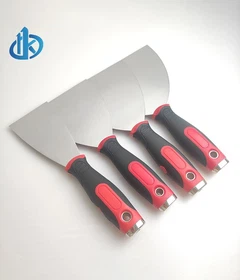
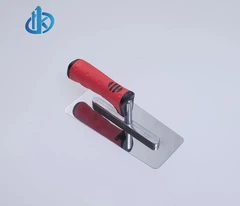
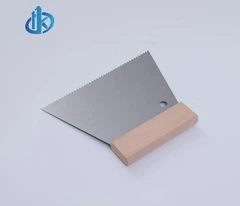
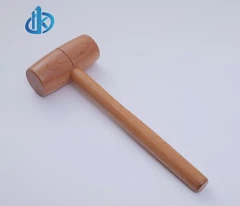


Customization of Putty Knives with Tail Pins (Tail Hammers)
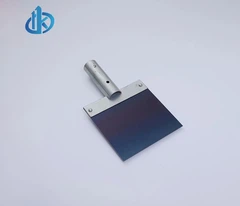
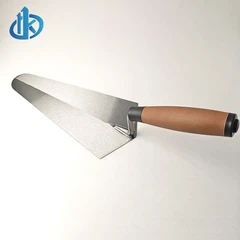
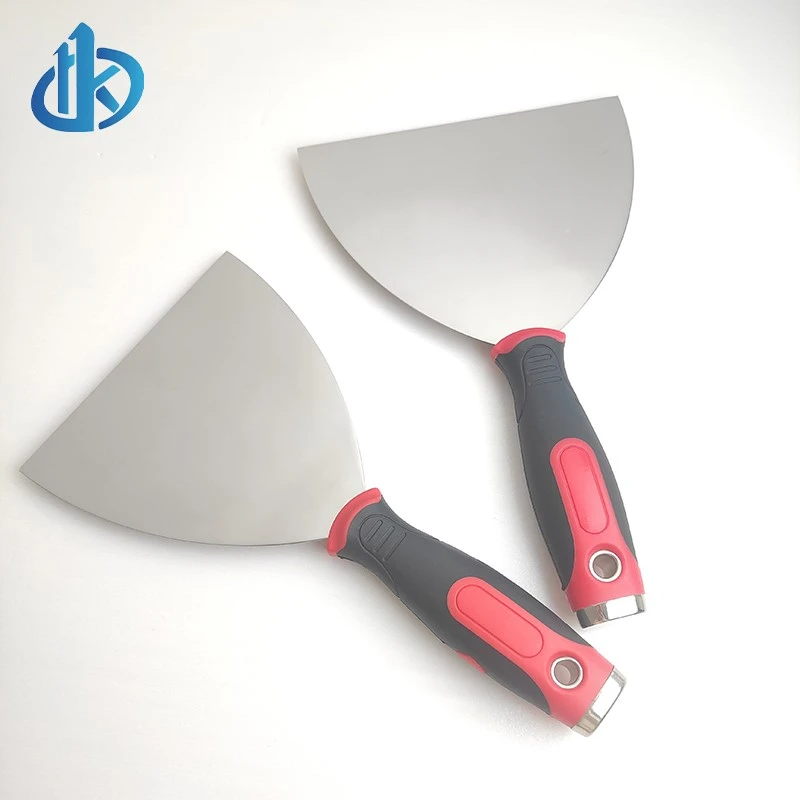
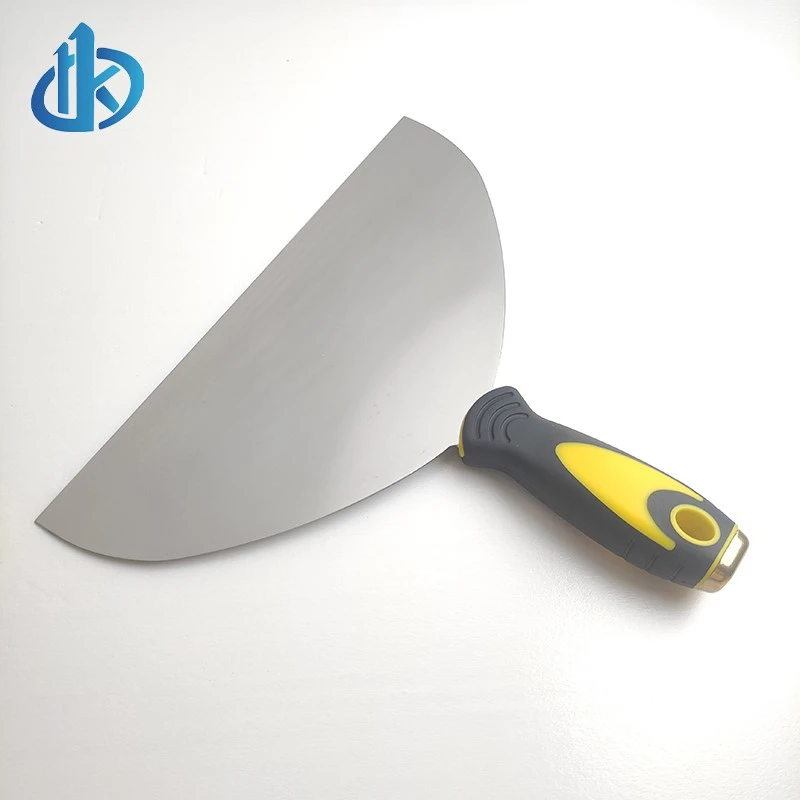
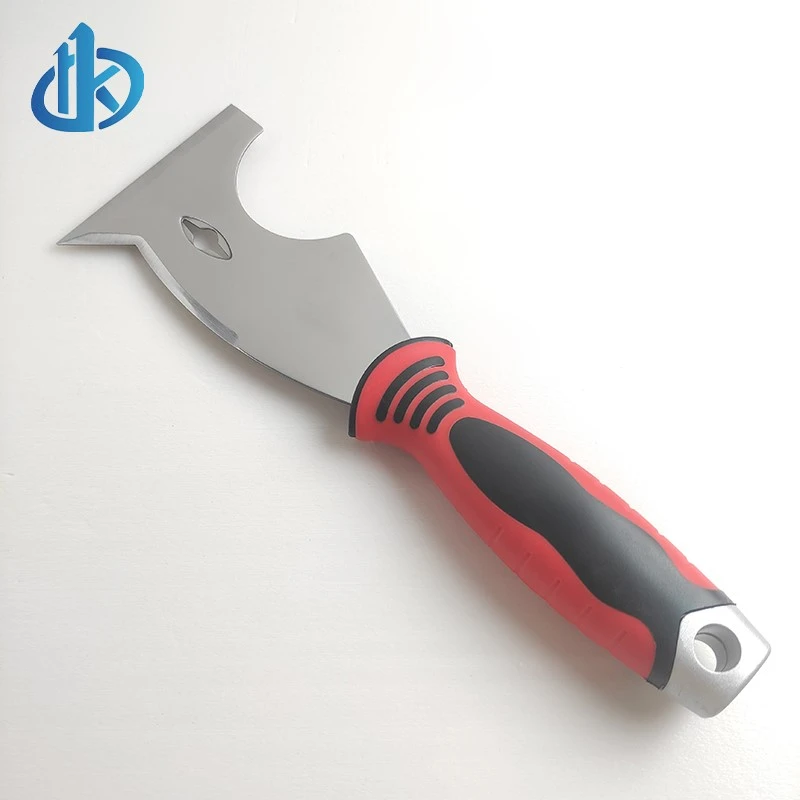
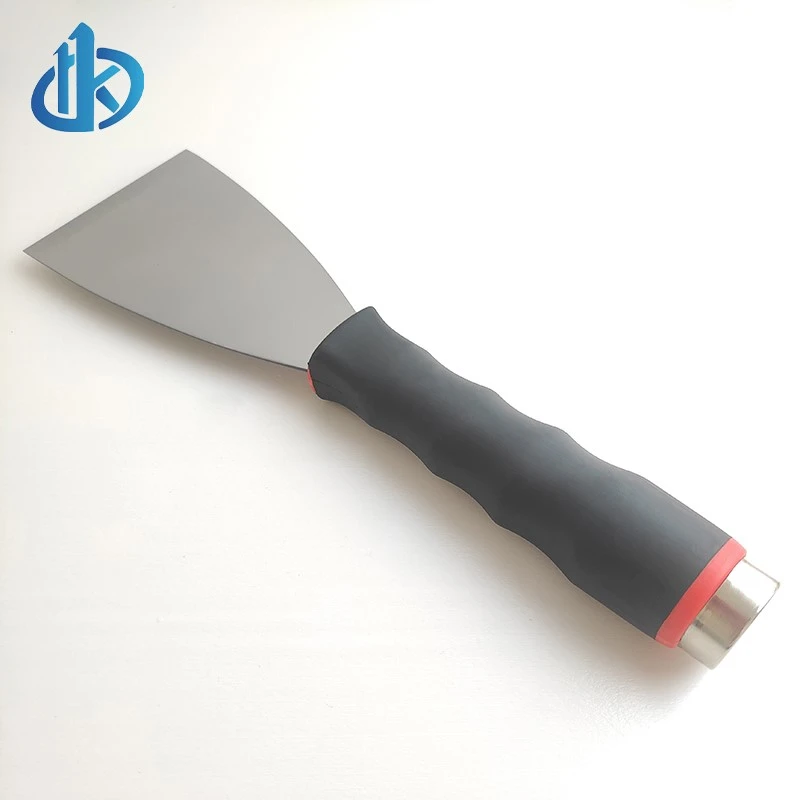
Many putty knives are equipped with tail pins, also known as tail hammers. These tail pins or tail hammers can be classified into various types, such as those made of metal, plastic, square-shaped, round-shaped, or ring-shaped ones. They not only serve a decorative purpose but also have numerous practical functions, which are detailed as follows:

Balance the Center of Gravity of the Tool
The tail pin (tail hammer) of a putty knife can adjust the distribution of the center of gravity of the entire tool. When using the putty knife, an appropriate center of gravity position enables the user to hold it more stably and comfortably. For example, when the weight of the tail pin (tail hammer) is balanced with that of the blade part, during the scraping or filling operations, the user's hand will not feel overly fatigued or have difficulty controlling the force due to the shift of the tool's center of gravity, which helps to achieve precise operations.
Assist in Tapping
The tail pin (tail hammer) can serve as a small tapping tool. In some scenarios, for instance, when it is necessary to insert the putty knife into relatively hard filling materials or make the filling materials in the gaps more compact, the user can use the tail pin (tail hammer) to gently tap on the back of the blade to increase the downward pressure and make the operation more convenient and efficient.
Increase the Stability of the Tool
When the putty knife is placed on a workbench or other flat surfaces, the tail pin (tail hammer) can play a supporting role. Especially on some inclined surfaces or in work areas that are not very flat, the tail pin (tail hammer) can prevent the putty knife from sliding or tipping over easily, keeping the tool ready for use at any time and improving work efficiency.
Protect the Tail of the Handle
During the frequent use of putty knives, the tail of the handle is prone to damage from collisions, friction, and so on. The tail pin (tail hammer) can cover or wrap the tail of the handle, playing a certain protective role and prolonging the service life of the handle. For example, when putting the putty knife into a toolbox or moving it on the workbench, the tail pin (tail hammer) can withstand part of the impact force and reduce the direct damage to the handle.
Increase the Weight of the Tool to Enhance Pressure Transmission
For some situations where greater pressure is required for smearing or scraping operations, the tail pin (tail hammer) increases the overall weight of the putty knife. This enables the user to transfer the force to the blade part more effectively during the operation. For example, when dealing with relatively thick layers of putty or stubborn stains, a heavier putty knife can perform better.
Serve as Part of the Tool Identification
The shape, color, or material of the tail pin (tail hammer) can be used as an identification feature of the putty knife. Different models or types of putty knives can be distinguished by the characteristics of the tail pin (tail hammer). For example, professional-grade putty knives may be equipped with elaborate tail pins (tail hammers) with brand logos, while those for general purposes have relatively simple ones, which makes it convenient for users to identify and choose the appropriate tools.
Our company's customization of putty knives with tail pins (tail hammers) also follows the following procedures:
|
Process |
Process Details |
|
Requirement Communication |
Customers contact our company through phone, email, or online customer service, and detail their requirements for the use scenario of the putty knife, blade and handle material preferences, size, color, and exterior design. Our company personnel communicate with the customers in a timely manner and provide suggestions. |
|
Plan Formulation |
After the requirements are clear, our design team formulates a preliminary design plan according to the requirements combined with product functions and production processes, including putty knife size, material selection, function selection, and exterior design, and communicates and confirms with the customers in a timely manner; or if the customer provides an intended design drawing, after mutual communication and confirmation, our company can also directly produce a sample. |
|
Customer Feedback |
The customer reviews the plan. If they agree with the design plan, our company produces a sample; if not, both parties continue to communicate and adjust the plan until the customer is satisfied. |
|
Sample Confirmation and Business Negotiation |
After producing the sample, our company conducts tests on blade hardness, handle grip and anti - slip properties, overall durability, etc., and sends the sample to the customer. After the customer confirms the sample, both parties negotiate on quotation, contract, order quantity, packaging, LOGO, and other issues. |
|
Production and Delivery |
After both parties confirm all details, our company arranges production according to the sample standard. After production is completed, a quality inspection is carried out. After passing the inspection, it is packaged and delivered to the customer according to the agreement. |
Special Notes
1,Our company can provide full-size customization of putty knives with tail pins (tail hammers), namely: 1.25 inches, 1.5 inches, 2 inches, 2.5 inches, 3 inches, 3.5 inches, 4 inches, 5 inches, 6 inches, 8 inches, 10 inches, 12 inches and other sizes required by customers.
2,Regarding the specific material, shape, weight, structure, and other technical requirements of the tail pin (tail hammer), customers can contact our company's sales staff according to their needs. Our company will combine the customers' requirements with the conventional design cases of tail pins (tail hammers) to provide customers with satisfactory products.