
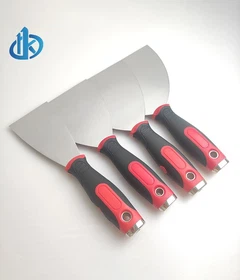
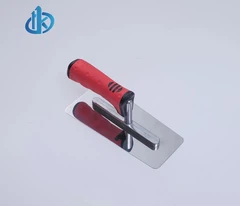
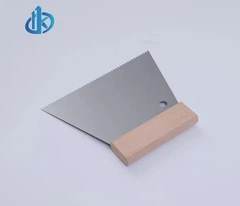
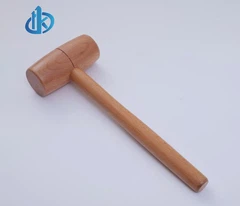
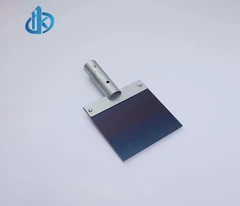

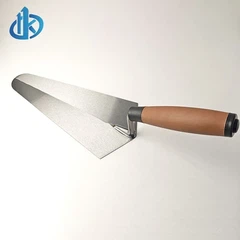

A rubber scraper is a scraping tool mainly made of rubber. The blade part is composed of rubber material and usually comes with a suitable handle for easy operation. Thanks to the unique flexibility, elasticity and a certain degree of wear resistance of rubber, rubber scrapers play an important role in many fields, especially in working scenarios that require a fine surface, need to avoid scratches and involve the processing of special materials, such as food processing, automotive painting, printing, chemical experiments and other industries. The main characteristics are as follows:

Excellent Flexibility
Rubber scrapers have outstanding flexibility. This enables them to adapt to the shape changes of the surface being scraped and not cause hard damage to the surface. For example, during the automotive painting process, when it is necessary to scrape off the excess paint on the vehicle body surface, the rubber scraper can closely fit the curves and contours of the vehicle body and gently scrape off the paint, ensuring the smoothness of the paint surface and not leaving scratches on the vehicle body, effectively protecting the integrity of the appearance of the automobile.
Good Elasticity
Good elasticity is another remarkable characteristic of rubber scrapers. During the scraping operation, when encountering some small protrusions or unevenness, the rubber scraper can buffer by virtue of its own elasticity, avoiding uneven scraping or damage to the surface being treated due to excessive pressure. For example, in the printing industry, when cleaning the ink on the printing plate, the rubber scraper can automatically adjust the scraping force according to the slight undulations of the plate surface and evenly scrape off the ink, ensuring the stability of the printing quality.


High Scraping Precision
Due to the material characteristics of rubber scrapers, they can achieve high scraping precision. In the manufacturing process of electronic components, when impurities or excess coatings on the surfaces of some tiny parts need to be accurately removed, the rubber scraper can accurately scrape off the target substances without damaging the precision parts, ensuring the quality and performance of the products. For example, in the field of optical instrument manufacturing, for the cleaning and treatment of the surfaces of optical elements such as lenses, the high-precision scraping ability of rubber scrapers can effectively remove dust, stains, etc., and not leave scratches on the lens surface or damage its optical performance, ensuring the imaging quality of optical instruments.
Scratch-free Operation
This is one of the most prominent advantages of rubber scrapers. Whether scraping on the surfaces of various materials such as glass, ceramics, metals or plastics, rubber scrapers hardly leave scratches. In the treatment of furniture surfaces, if it is necessary to remove slight stains or wax layers on the surface, using a rubber scraper can keep the furniture surface as smooth as new while cleaning.

Low-noise Operation
Rubber scrapers produce very low noise during the scraping process. In some work environments with strict noise control requirements, such as laboratories, hospitals and other places, this characteristic of rubber scrapers is particularly important. For example, in the pharmacy of a hospital, when it is necessary to scrape off the residual medicine on the inner wall of a medicine bottle, the low-noise operation of the rubber scraper will not interfere with the surrounding medical environment, providing a relatively quiet working and medical atmosphere for medical staff and patients, and also reducing the auditory stimulation and psychological pressure on the operators themselves caused by noise.
The process for customers to customize rubber scrapers is as follows
|
Process |
Process Details |
|
Requirement Communication |
Customers contact our company through telephone, email or online customer service, and detail their requirements regarding the usage scenarios of the scraper, preferences for blade and handle materials, size, color and appearance design, etc. Our sales staff will communicate with customers in a timely manner and offer suggestions. |
|
Scheme Formulation |
After the requirements are clear, our design team will formulate a preliminary design scheme based on the requirements, combined with product functions and production processes, including scraper size, material selection, function selection, appearance design, etc., and communicate with customers in a timely manner for confirmation. |
|
Customer Feedback |
Customers review the scheme. If they agree with the design scheme, our company will produce samples; if not, both parties will continue to communicate and adjust the scheme until the customer is satisfied. |
|
Sample Confirmation and Business Negotiation |
After producing samples, our company will send the samples to the customers. After the customers confirm the samples, both parties will negotiate on issues such as quotations, contracts, order quantities, packaging, LOGO, and outer boxes. |
|
Production and Delivery |
After both parties confirm all details, our company will arrange production according to the sample standards. After production is completed, quality inspections will be carried out. Once qualified, the products will be packaged and delivered to the customers as agreed. |
Explanation
Our company can customize rubber scrapers with conventional shapes, sizes and materials according to customer requirements, and can also customize other unconventional scrapers as required by customers. For specific schemes, customers can contact our company's sales staff to formulate them.