


A mallet and a hammer, while both tools used for applying force, have notable distinctions that make them suitable for different applications.
Starting with the head material, hammers typically have metal heads, often made of steel. This metal construction gives them great strength and durability, allowing them to withstand heavy impacts. They are designed to drive nails, break apart hard materials like concrete or stone, and perform other tasks that require a forceful blow. For example, in construction, a hammer is essential for framing walls, as it can quickly and firmly drive large nails into thick lumber.
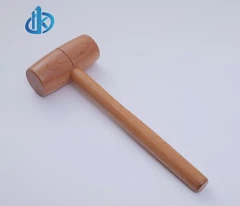
In contrast, mallets usually have heads made of softer materials such as wood, rubber, or rawhide. The wooden mallet is commonly used in woodworking. Its softer wooden head is less likely to damage the wood surface compared to a metal hammer. When assembling furniture or working on delicate wooden joints, a mallet can gently tap pieces into place without leaving dents or scratches. Rubber-headed mallets are great for tasks where you need to apply force without causing damage or making noise. They are often used in automotive repair to install or remove parts without marring the finish.
Regarding the handle design, hammers generally have a sturdier, shorter handle. This allows for better control when delivering a powerful, focused blow. The handle is often made of wood or fiberglass and is designed to absorb some of the shock from the impact. Mallets, on the other hand, can have longer handles depending on their use. A long-handled mallet provides more leverage, which is useful when working with large, heavy objects. For instance, a rawhide mallet with a long handle might be used in leatherworking to flatten thick pieces of leather evenly.
In terms of the force application, hammers are all about delivering a sharp, concentrated force. Their design is optimized for tasks that require driving or breaking. Mallets, however, are used for more controlled, gentle impacts. They are better suited for tasks where precision and protecting the surface are priorities. Understanding these differences is crucial for choosing the right tool to achieve the best results in any given project.


