
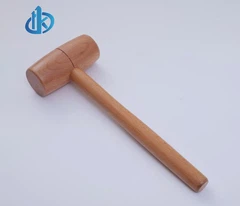


Ask a carpenter if they use a mallet, and they'll probably laugh-like asking a baker if they use a rolling pin. Mallets are as essential to their toolkit as saws and measuring tapes, with a million uses that make woodworking way easier.
First off, they're the go-to for fitting joints. When two pieces of wood need to lock together-like 榫卯 or dowel joints-a carpenter will tap them gently with a wooden mallet to get that perfect, snug fit. Hammers are too harsh here; they'd split the wood or leave dents. Mallets? They apply force evenly, like a firm but friendly nudge.
Pair a mallet with a chisel, and magic happens. Carving out grooves, shaping edges, or cleaning up rough spots-carpenters let the mallet tap the chisel's handle, guiding it through the wood with precision. It's like a dance: the chisel leads, the mallet follows, and the wood bends to their will.
They're also handy for adjusting tools. Need to tap a saw into place or secure a clamp? A mallet's got the right touch-enough force to get things tight, not enough to break them. And when working with delicate woods (think oak or walnut), a rubber mallet comes out to avoid marring the surface.
Sure, hammers have their place, but mallets are the carpenter's secret weapon for finesse. Next time you walk past a workshop and hear that steady "thud-thud-thud," rest assured-a carpenter's mallet is hard at work, turning wood into something wonderful.


