





B2B Construction Tools News | Plastering Workflow Analysis
[Linyi Report] Recently, the question "Do you float or trowel first?" has attracted attention among construction teams and buyers. Experts note that the order of operations directly affects wall flatness, mortar adhesion, and final construction quality, making proper workflow essential.
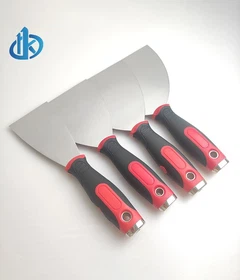
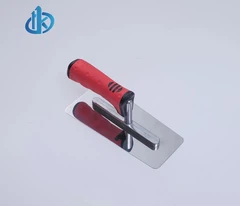
In practice, floats and trowels serve different purposes. The float is used for initial leveling, smoothing the mortar surface, while the trowel is applied for further compaction and fine finishing, ensuring a flat wall without visible marks. Properly arranging the sequence of float and trowel use can improve efficiency and reduce rework.
Linyi Hanke Tools Co., Ltd., a professional manufacturer of trowels and floats with long-term exports to Europe, the Middle East, and other markets, carefully designs products for blade hardness, handle comfort, and weight balance, meeting the requirements of various construction tasks. Whether for large-scale application or local touch-ups, Hanke Tools provides smooth and efficient handling.

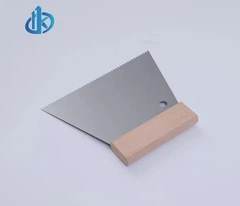
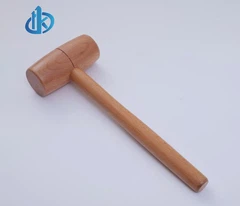
Industry experts emphasize that selecting the right tool size and material significantly impacts workflow. Hanke Tools leverages extensive field experience to offer multiple float and trowel combinations, adapting to different work conditions and mortar types to enhance efficiency and precision.
Regarding the question "Do you float or trowel first?", the consensus is that initial leveling with a float followed by trowel compaction ensures wall flatness and proper mortar adhesion. Hanke Tools' refined craftsmanship and optimized design allow construction teams to operate more easily and efficiently.
Looking ahead, as the construction industry demands higher quality and efficiency, professional floats and trowels will continue to play a central role on site. Hanke Tools plans to further optimize product design and specifications, providing reliable and efficient solutions for construction teams worldwide.


