
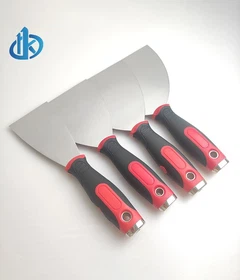
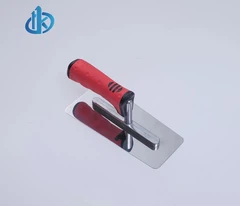


Ever wonder what the pyramids' masons used to smooth mortar? Or how medieval craftsmen got those perfect castle walls? Spoiler: It wasn't the ergonomic trowel in your garage. The plastering trowel's come a long way-from rocks to high-tech alloys. Let's take a walk through history.
Ancient Egypt (3000 BCE): Forget metal-they used polished stone. Think limestone or basalt, shaped into flat blades. Archeologists found one in a tomb that's still smooth enough to see your reflection. They'd wet the stone to keep mortar from sticking, sort of like we do today. No handles, though-just a grip carved into the back. Imagine smoothing a pyramid wall with a 10-pound rock. Talk about upper body strength.
Roman Empire (100 CE): Metal enters the chat. Bronze trowels, thin and flexible, with crude wooden handles. Romans were obsessed with smooth walls-they even invented a type of plaster made from lime and volcanic ash (hello, concrete's great-grandpa). Their trowels had pointed ends, perfect for getting into corners of those fancy domes. A mosaic in Pompeii shows a worker using one-look closely, and it's surprisingly similar to a modern trowel, minus the ergonomics.
Medieval Europe (1200s): Iron takes over, but it's clunky. Blacksmiths hammered out blades by hand, so no two were alike. Handles were usually just sticks jammed into a hole-no comfort, just function. Castles and cathedrals needed thick plaster to insulate against the cold, so trowels got wider, up to 10 inches. Stained glass windows? Those smooth stone sills? Thank a medieval trowel wielder.
Industrial Revolution (1800s): Mass production arrives. Suddenly, trowels are made in factories, with uniform blades and standardized sizes. Steel replaces iron-sharper, lighter, less likely to rust (sort of). Handles get better too-leather-wrapped wood, which is easier on the hands during long workdays. This is when "plasterer" becomes a trade, not just a job for laborers.
1950s-1990s: Plastics and stainless steel. World War II brings new materials-stainless steel blades that resist rust, plastic handles that are cheaper than wood. Trowels get lighter, more durable, and more accessible to DIYers. Suddenly, homeowners can patch walls without borrowing a heavy, rusty tool from the neighbor.
2000s-Present: Ergonomics and tech. Enter curved handles, lightweight alloys, and even "smart" trowels with sensors that tell you if you're applying too much pressure (okay, that's niche). Companies like Hanke and Marshalltown use computer design to create blades that flex just right. It's a far cry from those Egyptian stone tools-but the goal's the same: a smooth, perfect finish.
Who knows what's next? Maybe trowels with built-in LED lights for dark corners, or self-cleaning blades. But one thing's sure-people will always need a way to smooth plaster, and the trowel will keep evolving to meet the need. Pretty cool for a tool that's been around for 5,000 years, huh?


