
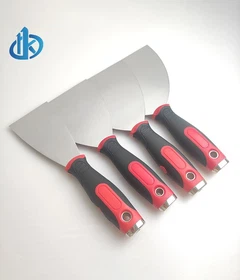
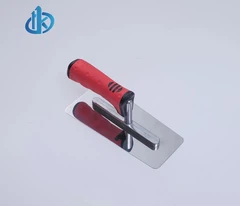
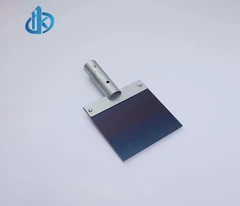

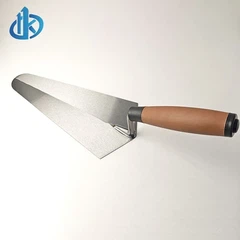

Using a trowel is a bit like learning to dance-once you get the rhythm, it feels natural, but it starts with mastering the basics. Let's break it down, step by step, whether you're spreading mortar, plaster, or adhesive:
First, grip it right. Hold the handle firmly but not tightly, like shaking someone's hand-your wrist should stay loose enough to flex. For most jobs, the blade should rest at a slight angle (around 15 to 30 degrees) to the surface; too flat, and you'll just push material around without control; too steep, and you'll dig grooves.
Next, load the blade. Scoop up a moderate amount of material (mortar, plaster, etc.) onto the blade. For spreading, tap the blade gently against the edge of your bucket to knock off excess-you want enough to cover a small area, not a mountain that will slump.
Now, spread and smooth. For mortar between bricks: press the blade against the wall, sliding it upward to leave a 1cm-thick layer, then use the edge to scrape off excess, leaving ridges that grip the next brick. For plaster: start at the top of the wall, pulling the blade downward with steady pressure, overlapping each pass slightly to avoid lines.
The key is consistency. Keep your arm moving from the shoulder, not just the wrist, to cover large areas evenly. If you see lumps or gaps, go back with a lighter touch to smooth them out-think of it as "feathering" the material into place.
And don't forget to clean as you go. Wipe the blade with a damp cloth when it gets caked with dried material; a clean blade glides better and leaves cleaner finishes. With practice, you'll learn to "read" the material-how it feels under the blade, when it's too wet or too dry-and adjust your pressure accordingly. It's not about speed; it's about control. Soon enough, you'll be moving that trowel like you've been doing it for years.


