



How do we call a wooden hammer?
Recently, "How do we call a wooden hammer?" has become a frequently searched keyword among overseas users seeking tool-related information.
This trend reflects the growing international interest in the proper terminology and usage differences of wooden hammers. With years of export experience, Linyi Hanke Tools Co., Ltd. (Hanke Tools) has provided a brief explanation based on industry practice and customer feedback.
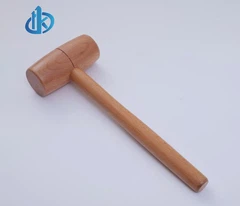
In English, a wooden hammer is commonly referred to as a "mallet" rather than being directly translated as "wooden hammer." This term better reflects its material and intended purpose: compared to traditional metal hammers, a mallet's striking surface is softer, making it suitable for woodworking assembly, mortise-and-tenon adjustments, furniture making, and tasks that require protection of the workpiece surface.

Hanke Tools points out that a high-quality mallet should have the following features:
- Made from high-density hardwoods such as birch, oak, or beech to ensure durability and stability;
- A securely attached head and handle to prevent loosening after long-term use;
- An ergonomically designed handle that provides a comfortable grip and reduces fatigue during extended work.
However, the impact force of such tools is relatively limited. They are not suitable for heavy striking or metalworking, where metal hammers remain irreplaceable.
For many years, Hanke Tools has been committed to exporting wooden mallets to Europe, the Americas, and the Middle East. With stable quality, a variety of specifications, and customized options, their products have earned the trust of professional woodworkers and DIY users alike.
For more product details and partnership information, please visit the official website of Linyi Hanke Tools or contact authorized distribution channels.
-The right term and the right tool make communication and workmanship more precise.


