
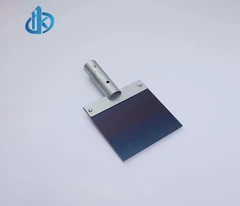

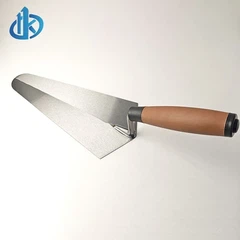

Choosing between fixed and adjustable corner trowels is like choosing between a pair of jeans that fit perfectly and a pair with an elastic waist-one is great for specific jobs, the other is flexible. The key is to ask yourself: What projects am I working on?
Let's start with fixed corner trowels. These are the most common-they have a set angle (usually 90 degrees for inside corners) that doesn't move. They're simple, cheap, and easy to use. If you're working on standard drywall (which almost always has 90-degree corners), a fixed trowel is perfect. It's like using a fork for a sandwich-no adjustments needed, just pick it up and go. Fixed trowels are also more durable than adjustable ones because they have fewer parts (no hinges or knobs to break). I use a fixed trowel for 90% of my projects-standard corners are everywhere, and it's never let me down.
Now, adjustable corner trowels. These let you change the angle of the blade-usually from 70 degrees to 135 degrees. When would you need that? If you're working on non-standard corners, like a sloped ceiling, a bay window, or an old house where walls aren't perfectly square (spoiler: most old houses have wonky corners). I once helped a friend redo a attic with sloped walls-her corners were 120 degrees, and a fixed trowel was useless. An adjustable one saved the day-we set the angle, and it worked like a charm.
But adjustable trowels have downsides: They're more expensive (usually $30 to $50 vs. $15 to $25 for fixed), and they're bulkier. The hinges can also get gunked up with joint compound if you don't clean them properly. So here's my advice: If you only work on standard 90-degree corners, stick with fixed. If you do a lot of custom projects or work on old homes, get an adjustable one (and keep the hinges clean!). You can even have both-most DIYers do. It's like having a hammer and a screwdriver-different tools for different jobs.


