
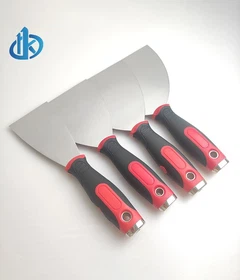
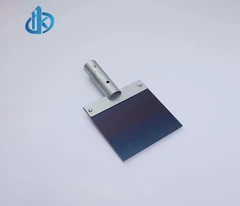

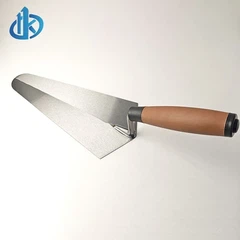

The big difference is all in the blade-specifically, how it's ground and how that affects how it works. Let me break down the key differences, 'cause once you use both, you'll feel the contrast right away.
First, the blade shape. A regular putty knife has a flat blade-both sides are straight, so the edge is just a sharpened flat edge. A hollow grinding putty knife has a blade with slight, curved "hollows" on both sides (like I mentioned before-subtle, but there). This means the blade's edge is thinner and more precise than a regular one. Imagine running a flat blade over joint compound-you might get a little drag. The hollow edge? It glides 'cause there's less blade surface touching the compound.
Then, flexibility and control. Hollow ground blades are usually more flexible (but still strong!) than regular ones. The hollow grind removes a tiny bit of metal from the blade's sides, which makes it bend slightly when you press it-perfect for conforming to uneven surfaces, like a bumpy drywall seam. A regular flat blade is stiffer; it might skip over those bumps instead of smoothing them out. I tested this once when patching a drywall seam-with the regular knife, I had to go over it 3 times to get it smooth. With the hollow ground one? One pass, and it was perfect.
Another difference is how they handle thick materials. If you're spreading something thick, like joint compound or heavy wood putty, a regular putty knife can leave clumps or streaks 'cause the flat blade pushes too much material at once. The hollow ground blade's curved sides let the material sit in the "hollow" a little, so you can spread it more evenly without over-smoothing. My dad uses a hollow ground knife for installing drywall-he says it cuts down on the time he spends sanding later 'cause the compound goes on so smooth.
Oh, and sharpness retention. The hollow grind makes the edge thin, but since the grinding process strengthens the metal around the edge, it stays sharp longer than a regular putty knife. I've had my hollow ground knife for 2 years, and I still haven't had to sharpen it-my regular one needed sharpening after 6 months of similar use.
The only real downside? Hollow ground knives are a tiny bit pricier than regular ones (maybe 5−10 more), but if you do a lot of spreading or drywall work, it's worth it. For super simple jobs (like patching a tiny nail hole), a regular one is fine-but for anything that needs precision, the hollow ground version is better.


