
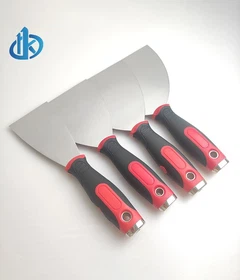
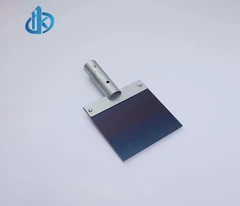

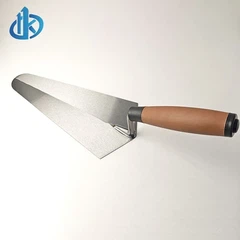

The production of the rubber and plastic handle of a putty knife involves several key steps.
Firstly, material selection is crucial. High-quality rubber and plastic materials are chosen based on their durability, flexibility, and grip properties. For rubber, it might be natural or synthetic rubber compounds, while plastics could include polypropylene or other suitable polymers.
Once the materials are sourced, the molding process begins. Injection molding is a commonly used technique. In this process, the raw plastic or rubber material, in granular form, is fed into an injection molding machine. The machine heats the material until it reaches a molten state. Then, under high pressure, the molten material is injected into a precisely designed mold cavity that has the shape of the putty knife handle.
The mold is typically made of metal and has been carefully crafted to ensure the correct dimensions, texture, and any ergonomic features. After injection, the material cools and solidifies inside the mold, taking on its final shape. For rubber handles, additional vulcanization processes might be involved to enhance its elasticity and strength.
Quality control is an essential part throughout. Inspectors check for any defects like air bubbles, incomplete fills, or surface imperfections. Once the handles pass the quality checks, they are removed from the mold and may undergo further finishing touches such as trimming off excess material or adding a logo through techniques like pad printing. Finally, the finished rubber and plastic handles are ready to be assembled with the metal blade of the putty knife, creating a complete and functional tool.
Our products


