







How long before the first trowel? - The Science of Timing the Initial Concrete Troweling
Linyi, China - The query "How long before the first trowel?" has recently become a popular search term on Google construction tool platforms, highlighting contractors' strong focus on the timing of the initial concrete troweling. Properly timing the first troweling operation is crucial to the quality and durability of the concrete surface. Linyi Hanke Tools Co., Ltd., drawing on extensive export experience and field feedback, offers professional guidance for construction teams.
Generally, the timing of the first trowel depends on the initial set of the concrete. Initial set refers to the stage when concrete transitions from a plastic to a hardened state, the surface loses its sheen, and light pressure no longer leaves obvious impressions. This process typically occurs between 30 minutes to 2 hours after pouring, but can vary significantly based on temperature, humidity, cement type, and mix proportions. Troweling too early may cause surface loosening and cracking, while troweling too late increases difficulty and reduces finish quality.

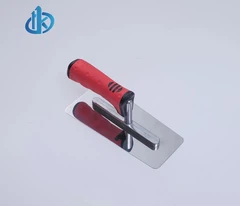
Linyi Hanke Tools emphasizes that high-quality trowels are key to ensuring excellent first-pass finishing. Hanke's stainless steel trowels feature precision-polished blades with optimal flexibility and corrosion resistance, combined with ergonomically designed handles to help workers control pressure and rhythm precisely for the best results.
Moreover, workers should adjust their timing flexibly based on site conditions. Hot weather accelerates concrete hardening, shortening the window for initial troweling; cold or humid conditions prolong it. Proper scheduling paired with scientific curing practices is essential for guaranteeing project quality.
In summary, the timing for the first trowel cannot be universally fixed but requires dynamic assessment of multiple factors. Linyi Hanke Tools Co., Ltd. remains committed to providing diverse, high-performance trowels and technical support worldwide, helping elevate concrete construction to higher standards of quality and efficiency.


