
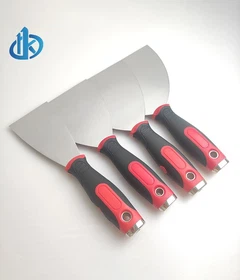
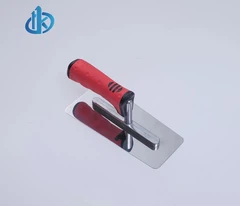
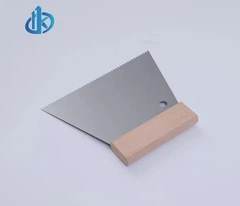
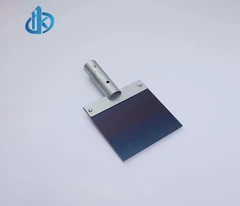

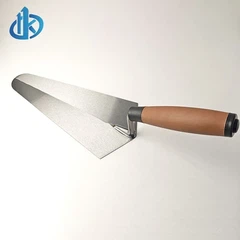

In the realm of construction and DIY projects, spackle knives play a crucial role. There are several distinct types, each designed to meet specific needs.
Standard Spackle Knife
The most common one is the standard spackle knife. It usually has a flat, rigid blade made from stainless steel or carbon steel. The blade is often mirror - polished, which not only gives it an appealing look but also reduces friction during use. This type is great for general - purpose tasks such as filling small holes, cracks on walls, and applying spackle evenly on smooth surfaces. Its simple design and wide availability make it a go - to choice for both beginners and experienced DIYers.
Flexible Spackle Knife
As the name implies, the flexible spackle knife has a blade with a certain degree of elasticity. This elasticity allows the blade to conform to uneven surfaces much better. When working on rough - textured walls or surfaces with irregularities, the flexible blade can bend and adapt, ensuring that the spackle is applied smoothly without leaving gaps or lumps. It is especially useful for tasks where a seamless finish is required on non - flat areas.
Angled Spackle Knife
An angled spackle knife features a blade that is set at an angle to the handle. This design offers enhanced precision and control in hard - to - reach areas. For example, when filling gaps in corners or edges, the angled blade can access these tight spaces more easily compared to a standard straight - bladed knife. It is also beneficial for applying spackle in areas where a specific angle of application is needed to achieve the best results.
Mini Spackle Knife
Mini spackle knives are compact and small - sized. They are ideal for detailed work, like filling tiny nail holes or small imperfections in furniture. Their small blades allow for more delicate handling, making them perfect for projects that require a high level of precision and where a larger knife would be too cumbersome.
In summary, the variety of spackle knives caters to different tasks and preferences. Whether you're a professional contractor or a DIY hobbyist, understanding these types can help you choose the right tool for your specific project needs.


