
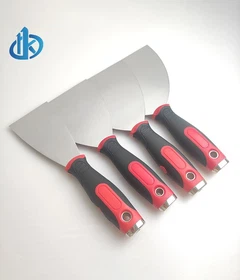


Taking care of a good putty knife is easy-you just need to do a few simple things, and it'll last for years! Let's start with cleaning, 'cause that's the most important part. The second you're done using it, wipe off the blade with a damp cloth. If you're using drywall mud or spackle, warm water works great-just wipe it down until the blade is clean. I keep a rag in my toolbox specifically for this, and it takes 30 seconds.
If you're using oil-based products (like wood filler or oil-based spackle), warm water won't cut it-use mineral spirits or paint thinner. I refinished my deck last year and used oil-based wood filler; I wiped the blade with mineral spirits right after, and it came clean in seconds. Don't let oil-based products dry on the blade-they'll harden like concrete, and you'll have to scrape them off (which can damage the edge).
After cleaning, dry the blade completely with a towel. Even high-quality stainless steel can rust if it's left damp. I once forgot to dry my knife after cleaning it, and it had a tiny rust spot the next day-luckily, I scrubbed it with a little steel wool, and it came off. But if you leave it damp for days? Rust will set in, and you'll ruin the blade.
Storage is another big one. Keep your putty knife in a dry place-don't leave it in a damp garage or outside. I store mine in a toolbox with a silica gel packet to absorb moisture. If you have multiple knives, don't stack them blade-to-blade-they can scratch each other. I use a tool roll with separate pockets for each knife, and the blades stay scratch-free.
Avoid abusing the knife! Don't use it as a pry bar (I've seen people do this-bad idea!) or hit it with a hammer. The blade is meant for spreading and scraping, not heavy duty prying. If you need to pry something, use a screwdriver or a pry bar-your putty knife will thank you.
Every few months, check the handle connection. If it's a riveted handle, make sure the rivets are tight. If it's a welded handle, look for cracks. My Stanley knife's handle has a small weld, and I check it every 3 months-still tight as can be.
And if the blade gets dull? Sharpen it! You don't need a fancy sharpener-just a metal file or a sharpening stone. I sharpen my knife once a year, and it's still as sharp as the day I bought it. Cheap knives can't be sharpened (they'll bend), but high-quality ones hold an edge.
With these simple steps, your high-quality putty knife will last for years. I've had mine for 4 years, and it still works like new-all because I clean it right after use and store it properly. It's easy, and it saves you money in the long run!


