
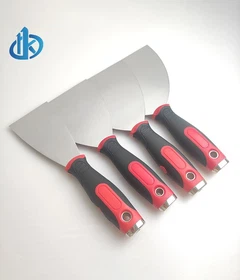
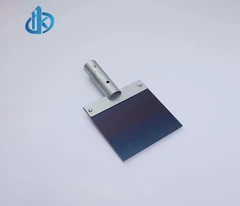

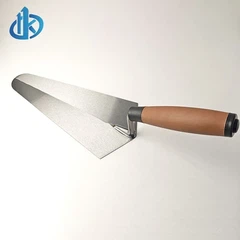

When I first started DIYing, I had one putty knife: a 5-inch stainless steel one I bought on sale. I used it for everything-from patching nail holes in my bookshelf to scraping old paint off my porch ceiling. Spoiler: it was a disaster. The small holes took forever to fix (I kept smearing putty outside the hole), and my arm ached after scraping the porch (the knife was too small to cover much area). That's when I learned: size matters-a lot-when it comes to putty knives. Let's break down how to choose the right one for any job.
2-3 Inch (Mini Putty Knives): The "Precision Pros"
These tiny knives are like the tweezers of your toolbox-they're for small, detailed work. Think: patching nail holes in furniture, filling tiny cracks in trim, or touching up wood filler on cabinets. I keep a 2.5-inch one in my craft drawer, and it's a lifesaver for fixing chips in my wooden cutting boards. The narrow blade lets you get into tight spots (like between chair legs or around doorknobs) without making a mess. Pro tip: If you're working on something with curves (like a wooden bowl), go for a flexible plastic blade- it bends better than metal.
4-5 Inch (All-Purpose Knives): The "Everyday Heroes"
This is the size I reach for 90% of the time. It's perfect for medium jobs: filling wall cracks (up to 1 inch wide), smoothing joint compound on small drywall patches, or scraping old wallpaper off narrow walls (like in hallways). My 5-inch knife is my go-to for touching up paint chips on my living room walls- it spreads putty evenly without covering too much area (so I don't have to repaint the whole wall). The best part? It's lightweight enough to use for an hour without arm fatigue, but sturdy enough to handle light scraping.
6-8 Inch (Large Putty Knives): The "Heavy Lifters"
When you're tackling big projects, you need a big knife. These are for: scraping large sections of old paint (like a whole wall or a door), spreading joint compound on large drywall patches (bigger than a dinner plate), or even smoothing out cement board adhesive in the bathroom. I used an 8-inch knife to prep my basement walls for painting, and it cut my scraping time in half-no more going over the same spot 10 times. Just a heads up: these are heavier, so they're not great for small jobs (you'll end up with putty everywhere).
10+ Inch (Extra-Large Knives): The "Pro Tools"
Honestly, most DIYers don't need these. They're for professional jobs like hanging drywall in an entire room or smoothing out large areas of plaster. I borrowed one from my cousin (who's a contractor) once, and it was way too big for my DIY projects-I could barely control it! Stick to smaller sizes unless you're doing a major renovation.
The bottom line? Don't be like past me-invest in 2-3 sizes (I recommend 3-inch, 5-inch, and 8-inch). It'll save you time, frustration, and a lot of messy cleanups. And when in doubt? Go smaller-you can always do a second pass, but you can't undo a putty-covered disaster!


