
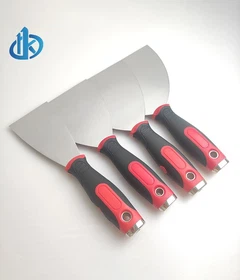



"Skillfully Remove Dried Spackle from a Putty Knife and Bring the Tool Back to Life"
In the busy world of building renovations and creative handicrafts, putty knives are frequently used in various projects. However, the dried spackle left on them after use often gives people a headache. Mastering the correct methods to remove it can keep the putty knife sharp at all times and ready to start the next "creative journey" anytime.
For professional building maintenance teams, during the periodic renovation projects of large shopping malls, the dried spackle on putty knives accumulates extremely quickly. At this time, they have their own efficient cleaning procedures.
First, prepare a high-temperature-resistant container and pour an appropriate amount of industrial adhesive remover into it. Completely immerse the dirty putty knife in it and use the powerful dissolving property of the adhesive remover to break down the dried spackle from the inside.
After soaking for about 20 - 30 minutes, put on professional protective gloves, take out the putty knife, and then carefully scrub it along the texture of the knife body with a copper wire brush. The copper wire brush is hard in texture but not easy to damage the blade, and it can thoroughly remove the softened spackle residue, quickly restoring the putty knife to cleanliness, helping maintenance workers accurately repair wall cracks and holes and making the mall walls look brand new.

After the parent-child handicraft workshops held in the community, the putty knives used by the children are also full of dried spackle. Considering the simplicity of operation and safety, parents can clean them together with their children using common materials found in the kitchen.
First, soak the putty knife in warm water for 10 - 15 minutes to slightly soften the spackle. Then, dip an old toothbrush in a small amount of detergent and gently brush the knife body. The detergency of the detergent combined with the fine bristles of the toothbrush can gently remove most of the stains.
Moreover, the whole process is full of fun, allowing children to learn to take care of tools and experience the sense of achievement brought by labor while cleaning, getting ready for the next handicraft creation.
For DIY enthusiasts who are passionate about making their own furniture, after completing a solid wood bookshelf making project, the dried spackle on the putty knife is mixed with wood chips and glue and is extremely stubborn.
They will first place the putty knife in a well-ventilated area and use a hair dryer on the low heat setting to blow evenly on the knife body to make the spackle brittle as it heats up. Subsequently, place the knife body flat on a hard board and gently scrape along the blade and the knife surface with a small wooden or plastic piece, avoiding scratching the knife body.
Finally, wipe it with a damp cloth once, and a clean and neat putty knife will be able to play a big role in the new DIY journey again, helping enthusiasts create more unique works.
Mastering these tricks to remove dried spackle can enable putty knives to be always new and continuously play a "big role" in various fields for professional people, ordinary families, and handicraft lovers alike, adding luster to a better life.


