
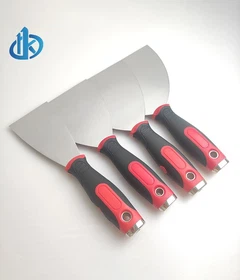
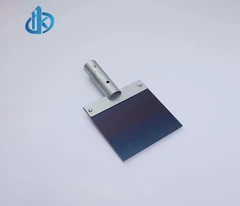

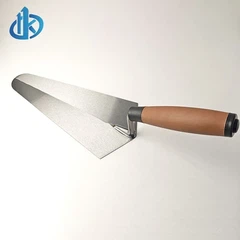

Firstly, before using it, make sure that the blade of the putty knife is intact without any chips or being too blunt. If the blade is blunt, it can be sharpened appropriately so that it has a certain degree of sharpness and can better cut into the dirt layer.
When the preparatory work is done, when facing situations such as dried stains on the surface of ceramic tiles, glass or the residual glue on the wall after decoration, the user needs to hold the handle of the putty knife firmly with one hand and place the blade close to the plane where the dirt is located at an appropriate angle.
For example, when removing dirt on ceramic tiles, the blade can be at an angle of about 15 to 30 degrees to the surface of the ceramic tile. Then, gently apply a certain amount of pressure to let the blade embed into the edge of the dirt and start the prying or scraping actions.
During the operation, it is crucial to control the strength to avoid scratching the surface of the object being cleaned. For example, when removing the residual stickers on wooden furniture, you need to be extremely careful and slowly scrape off the stickers and the glue marks underneath with gentle and steady force.
For some large areas of dirt residues, the method of dividing the area into sections for cleaning can be adopted. Gradually use the putty knife to move forward. After cleaning each small area, wipe off the scraped dirt debris in time with a rag to prevent it from adhering again or affecting the subsequent cleaning work.
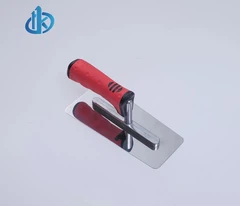
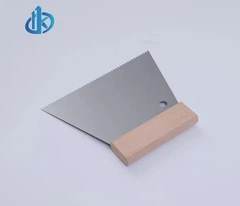
Product Demonstration


In addition, after using it, the dirt remaining on the putty knife should be cleaned up in time. Wipe it clean and store it properly for convenient use next time. By using the putty knife correctly, many stubborn dirt and residue cleaning problems can be solved efficiently, and the surfaces of various objects can be restored to cleanliness.


