
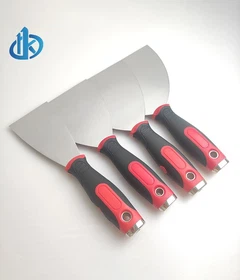
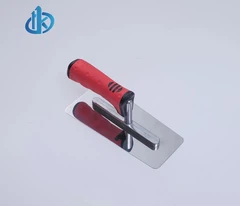
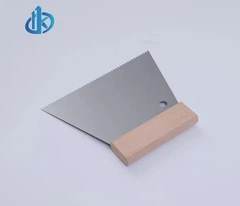


In the field of architectural decoration, removing old paint and coatings is a common and crucial step in renovation projects. A scraper, as a commonly used tool, can efficiently complete this task when used correctly.
First of all, before using the scraper, make full preparations. Be sure to wear protective equipment, such as gloves, goggles, and a mask, to prevent the old paint debris and dust from causing harm to the body during the operation.
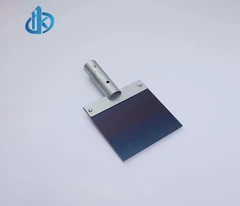
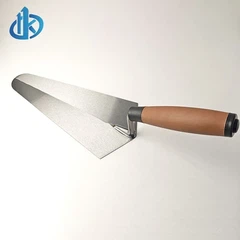
At the same time, prepare a suitable scraper. According to the thickness, hardness of the old paint and coating, as well as the difference of the surface, select different types of scrapers.
For example, a hard metal scraper is suitable for thicker and harder coatings, while a soft plastic scraper is more suitable for use on more fragile surfaces.
When starting the operation, fit the edge of the scraper to the surface of the old paint or coating at a certain angle. Generally, an angle between 30 degrees and 45 degrees is more appropriate.
Then, apply pressure steadily along the surface and push the scraper to scrape. It should be noted that the force should be uniform to avoid damaging the base surface due to excessive force.
For some stubborn old paint or coatings, some auxiliary means may be needed. For instance, a chemical paint remover can be used to soften the old paint first. After it is softened, use a scraper for cleaning, which can greatly improve work efficiency.
During the scraping process, promptly clean up the scraped old paint and debris to keep the work area tidy, so as to better observe the scraping effect. After the scraping is completed, the surface also needs to be sanded to make it smoother and flatter, laying a good foundation for the subsequent decoration construction.


Using a scraper to remove old paint and coatings correctly can not only ensure the quality of the renovation project but also improve work efficiency. It is an important skill that architectural decoration practitioners must master.


