
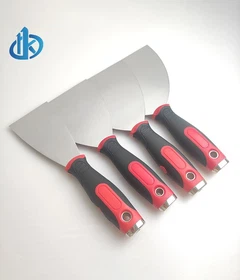
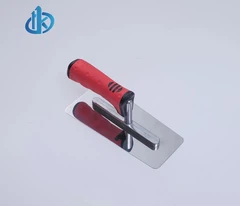
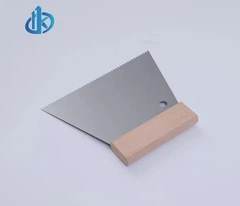
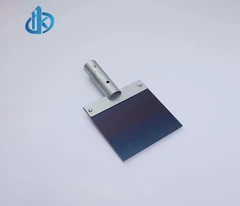

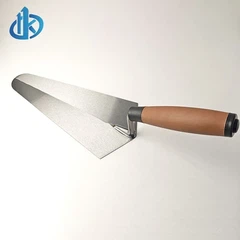

In the field of architectural decoration, filling holes is a common and important task, and the high-carbon putty knife often plays a crucial role in it.
Firstly, make sure the preparatory work is done properly.
Workers should select high-carbon putty knives of appropriate specifications. For relatively small holes, those with narrower blades can be chosen, while for larger holes, wider-bladed ones are more convenient.
Meanwhile, prepare the corresponding putty materials, ensuring that they are of qualified quality and have a uniform texture so that they can adhere and fill well.
Next, before use, check whether the blade of the high-carbon putty knife is flat and smooth.
If there are any flaws, it needs to be polished to avoid affecting the filling effect. When starting to fill, use the putty knife to take an appropriate amount of putty and evenly apply it to the edge of the hole, and then slowly fill the inside of the hole.
The method of filling in layers can be adopted. Press and scrape each layer flat with the putty knife to ensure that the putty closely adheres to the hole walls and prevent problems like hollowing in the future.
After the filling is roughly completed, use the blade of the high-carbon putty knife to carefully scrape off the excess putty around the hole, making the filled area smoothly transition and integrate with the surrounding walls or decorative surfaces.
When scraping, the angle at which the knife is held should be appropriate, and the movements should be steady and delicate.
Finally, after the putty is dried, the putty knife can also be used to gently polish it to further improve the surface flatness, laying a good foundation for subsequent processes such as painting and pasting wallpaper.
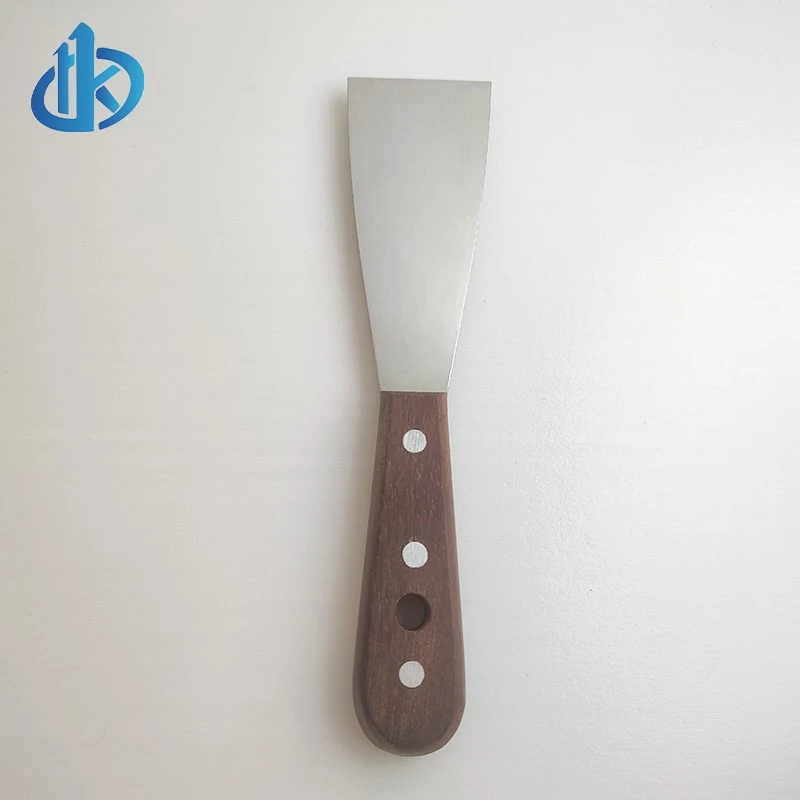

Mastering the correct method of using the high-carbon putty knife to fill holes is helpful for improving the quality of architectural decoration projects and creating a more beautiful and durable decorative effect, which is worthy of being skillfully used by construction workers.


