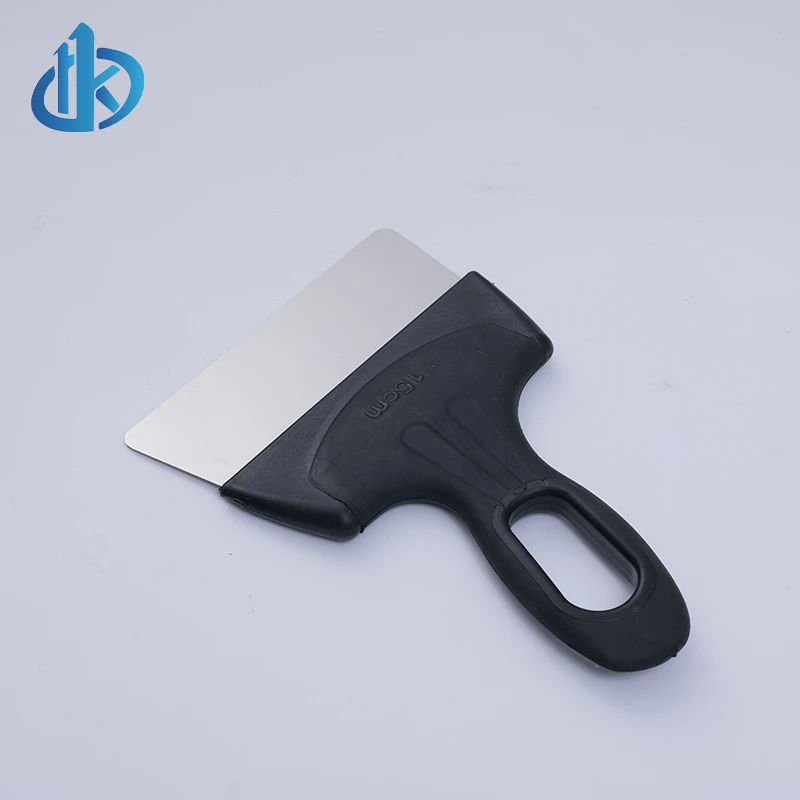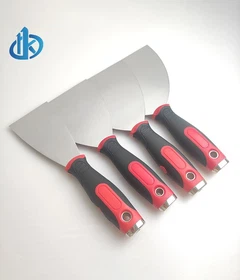
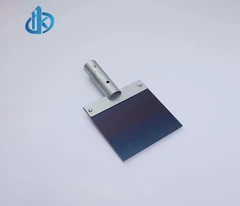

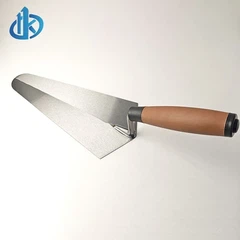

Choosing between a 4-inch and 6-inch taping knife is like picking between a precision screwdriver and a power drill-each has a job it does best, and neither is "better" overall. Let's break down when to reach for each.
A 4-inch knife is the detail-oriented workhorse. Its small size gives you pinpoint control, making it perfect for tight spaces where a larger knife would be cumbersome. Think about taping inside corners-where two walls meet-using a 4-inch knife lets you press tape into the crevice without smearing joint compound all over the surrounding area. It's also ideal for taping around obstacles like electrical outlets, light switches, or window trim. When you're embedding tape into a small seam or smoothing compound around a nail hole, the 4-inch knife lets you focus on the exact spot you need, preventing messy overspill. Plus, it's lighter, so your hand won't cramp up during long sessions of detailed work.
A 6-inch knife, on the other hand, is built for efficiency and coverage. When you're taping long, straight seams-like along a wall or ceiling-this knife covers more area with each swipe, cutting down on the number of passes you need to make. The extra width helps feather joint compound more smoothly, blending the edges into the wall so you don't end up with a noticeable ridge. When applying the second or third coat of compound (which smooths out the tape and makes it invisible), the 6-inch knife spreads the compound evenly over a wider area, ensuring the seam blends into the wall. It's also great for "bedding" tape-pressing it into the first layer of compound-on large seams, as it applies even pressure across the tape, preventing bubbles.
Here's the pro strategy: use both. Start with the 4-inch knife for corners, around fixtures, and small seams. Then switch to the 6-inch knife for long, straight seams and applying subsequent coats of compound. This way, you're never fighting with a tool that's too big or too small. Think of it as having a set of cooking knives-you wouldn't use a paring knife to chop a watermelon, and you wouldn't use a cleaver to peel a grape. The same logic applies here. With both sizes in your toolbox, you'll tackle any taping job with confidence, speed, and precision.