
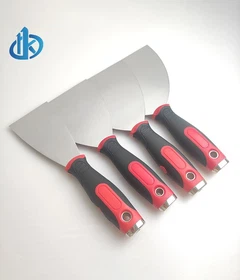
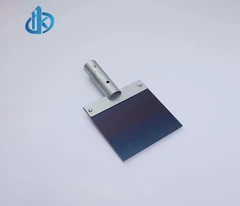

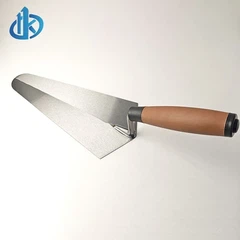

It depends on what you're using it for-there's no "one size fits all" here! Let me break it down, 'cause I've used both and learned the hard way which to pick for each job.
First, flexible blades. These are great for jobs where you need to contour to a surface-like drywall feathering, patching curved walls, or spreading thin layers of mud. A flexible blade bends just enough to follow the wall's shape, so you get a smooth, even finish without leaving streaks. I feathered the edges of a drywall patch last month with a flexible 4-inch Warner knife, and it blended so well with the wall I could barely see the patch. If I used a stiff blade, I would've left a ridge that needed tons of sanding.
Stiff blades, though, are better for thicker materials or pushing into tight spots-like wood filler, heavy spackle, or scraping old paint. Stiff blades have more pressure, so you can pack filler into cracks or scrape off tough paint without the blade bending. I scraped old paint off my wooden porch with a stiff 6-inch Stanley knife, and it handled the tough spots like a champ. A flexible blade would've folded over every time I pressed down.
Most high-quality putty knives have "semi-flexible" blades-stiff enough for heavy jobs, but with a little give for smooth spreading. My go-to knife is semi-flexible, and it works for 90% of my projects: drywall, wood filler, even painting prep. The only time I use a super flexible one is for drywall feathering, and a super stiff one for heavy scraping.
Pro tip: If you're not sure, get a semi-flexible one. It's the most versatile. I have a friend who only uses a semi-flexible knife, and he's done everything from patching drywall to refinishing furniture with it. The only mistake I ever made was using a stiff blade for drywall feathering-I ended up with a bump that took an hour to sand down. Now I always pick the blade based on the job, and it's made my projects way easier.


