
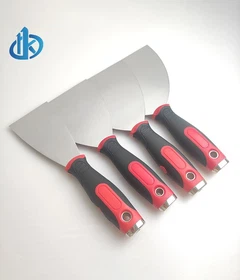
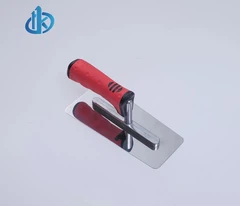
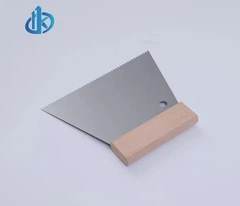
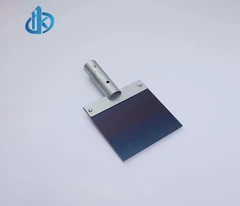

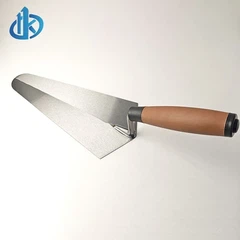

The choice between a flexible or stiff putty knife hinges on the specific task at hand, as each type offers distinct advantages tailored to different applications.
A flexible putty knife, typically made from thin stainless steel or spring-tempered metal, excels in tasks requiring precision and adaptability. Its bendable blade conforms to uneven surfaces, making it ideal for smoothing joint compound on drywall seams or applying thin layers of putty. The flexibility allows users to apply even pressure, reducing the risk of over-sanding or creating lumps. For delicate jobs like removing old caulk or scraping paint without damaging underlying surfaces, the gentle flex of the blade provides control. Additionally, flexible knives are easier to maneuver in tight spaces, such as corners or along trim, where rigidity might cause errors.
Conversely, a stiff putty knife, often constructed from thicker metal or plastic, thrives in heavy-duty scenarios. Its rigid blade withstands significant force, making it perfect for tasks like removing stubborn adhesives, stripping old paint from rough surfaces, or applying thick coatings of spackle. The sturdiness ensures minimal blade flex, allowing users to exert maximum pressure without bending the tool. This is crucial when working on concrete, masonry, or other hard substrates that require a firm edge. Stiff knives also excel in tasks demanding straight lines, such as scoring drywall or creating crisp edges in joint compound.
Ultimately, the "better" choice depends on the project's nature. Opt for a flexible knife for finesse work on delicate or uneven surfaces, and a stiff one for heavy-duty, force-intensive tasks. Many professionals keep both types on hand, as their unique capabilities complement each other in a wide range of applications, from home repairs to professional construction work.


