
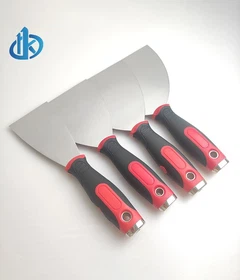
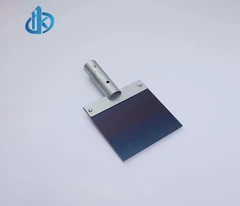

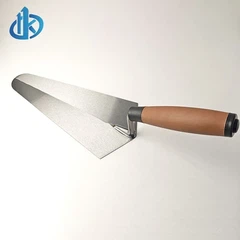

This question used to baffle me until I spent a weekend fixing drywall with my uncle. He handed me a "joint knife" and said, "Use this like a putty knife," and my confusion only grew. Let me break it down like he did-with zero jargon, just real talk.
A joint knife and a putty knife are siblings, not twins. They both have flat blades and handles, but they're built for different chores. Think of it like two brothers: one's a marathon runner, the other's a weightlifter-same family, different skills.
Joint knives are the marathon runners: long, flexible, and built for covering big areas. Their blades are thinner and bendier, perfect for spreading joint compound over drywall seams. When you're trying to blend compound into a large section of wall, that flexibility lets you "feather" the edges, making the seam disappear. My uncle swears by his 12-inch joint knife for this-he says it's like painting with a giant brush, smooth and even.
Putty knives, though? They're the weightlifters: shorter, stiffer, and ready for tough, precise work. Their blades are thicker, so they can push putty into tiny holes or scrape stubborn gunk without bending. Last week, I used a putty knife to fill a crack in my window frame-its stiff blade forced the putty deep into the gap, something a floppy joint knife would've botched.
Can you use a joint knife as a putty knife in a pinch? Sure. But it's like using a sledgehammer to hang a picture-overkill and messy. And vice versa? A putty knife on drywall seams would leave clunky, uneven patches. So, same family, but know their roles. Your walls will look better for it.


