
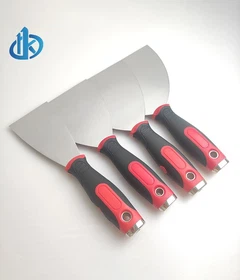
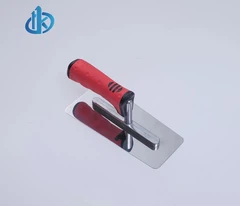
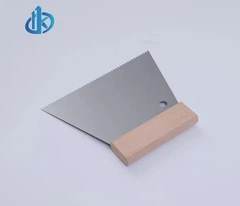
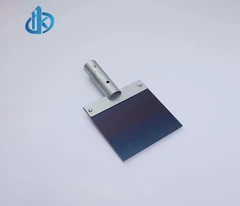

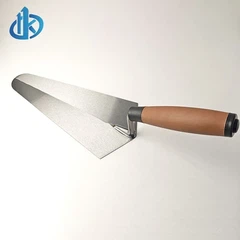

Let me clear this up: calling a mud knife a putty knife is like calling a wrench a screwdriver-they're in the same toolbox, but they've got very different day jobs.
Mud knives are the heavy lifters. They're thicker, stiffer, and usually bigger-think 6 to 12 inches. Their job? Slathering on thick, goopy stuff like drywall mud, plaster, or concrete. Ever watch someone tape and finish drywall? That's a mud knife in action, spreading compound smoothly over seams to hide them. They're built to handle pressure; push as hard as you want, and they won't flex. I once tried using a mud knife to apply putty to a window frame, though, and it was a disaster. The blade was so stiff, it smushed the putty everywhere, leaving a lumpy mess. Wrong tool, wrong job.
Putty knives, on the other hand, are the detail oriented ones. Smaller (1 to 5 inches), thinner, and more flexible, they're made for finesse. Their claim to fame? Spreading putty-a soft, doughy material used to seal gaps, fill nail holes, or bed glass in window frames. They can bend a little, which lets them glide over uneven surfaces without gouging. But here's the twist: people often mix up the names. A contractor might grab a 4-inch putty knife and call it a mud knife when they're patching a small wall. It's not wrong-it's just casual.
So, are they the same? Nope. But do they overlap? Sometimes. Think of it like this: all mud knives can do a putty knife's job in a pinch, but a tiny putty knife would collapse under a pile of drywall mud. Know your task, and you'll know which one to grab.
Our Products


