
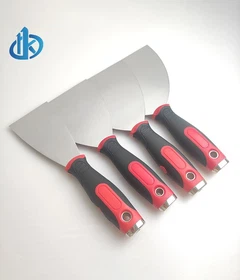
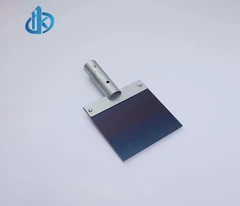

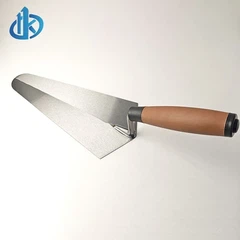

For drywall finishing (the final coats that make the seams smooth), yes-wider is almost always better. But let's clarify what "wide" means, and why it matters. I've tested both wide and narrow knives, and here's what I found.
First, what's "wide"? For finishing, that's 12-inch, 14-inch, or 16-inch. Narrower knives (8-inch, 10-inch) are great for taping and first coats, but not for finishing. Here's why wide is better: Finishing is all about blending the joint compound into the wall so you can't see the seam. A wide knife lets you spread the compound over a larger area-say, 14 inches across the seam-so the edges of the compound get thinner and thinner as they go out. That gradual transition means no harsh lines, no bumps, and a finish that's smooth enough to paint without sanding for hours.
If you use a narrow knife for finishing, you'll have to spread the compound in a narrow strip (only 8-10 inches wide). The edges will be steeper, so when you paint, the seam will still be visible-like a little ridge along the wall. I did this once with a 10-inch knife, and after painting, I could still see every seam. I had to go back and do another coat with a 12-inch knife to fix it. Total waste of time.
But here's a caveat: Wide knives are heavier, so they're a little harder to control if you're a beginner. Start with a 12-inch- it's wide enough for good blending, but not so heavy that your arm gets tired. Once you get the hang of it, you can move up to 14-inch. And remember: Hold the knife at a 45-degree angle, use your whole arm (not just your wrist), and go slow. A wide knife + slow, smooth passes = perfect finish.


