
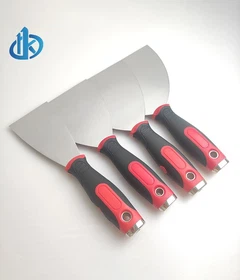
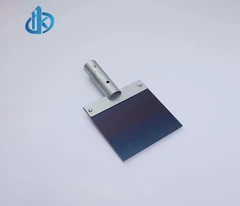

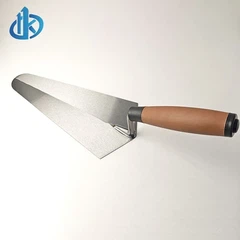

Recently, in the field of ancient building restoration, a seemingly ordinary tool - Putty Knife - has attracted wide attention within the industry for its unique role.
In numerous ancient building restoration projects, Putty Knife has demonstrated irreplaceable advantages.
Traditional ancient buildings, after being eroded by the passage of time, often have problems such as peeling and cracks on walls and wood carvings, which require meticulous filling and restoration work.
Thanks to its flat and somewhat flexible blade, Putty Knife can accurately and evenly apply specially prepared filling materials to the damaged areas.
For example, during the restoration of a Ming and Qing Dynasty ancient folk house, craftsmen used Putty Knife to deftly fill the tiny gaps in the wood carving components with putty whose color was close to that of the ancient building.
The blade could flexibly conform to the complex carving patterns, ensuring that the repairs were both firm and aesthetically pleasing, maximizing the restoration of the original exquisite appearance of the wood carvings.
Moreover, for some uneven areas on the surfaces of ancient building walls where the paint has peeled off, Putty Knife can assist in scraping off the aged and loose coatings, laying a good foundation for subsequent protection processes such as repainting.
Its ease of operation has also improved the restoration efficiency, helping restoration teams to advance project progress more efficiently while ensuring quality.
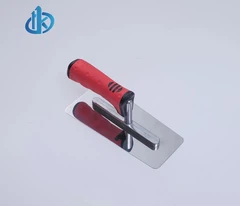
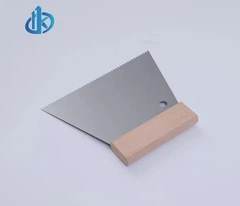
Product Demonstration


Nowadays, more and more professionals in the field of ancient building restoration have recognized the unique value of Putty Knife, and it is gradually becoming an indispensable and capable "assistant" in this field, helping more ancient buildings regain their former glory.


