
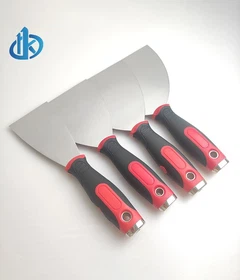
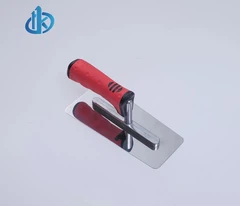
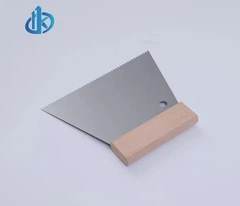


The teeth on a plastering trowel serve several important functions that enhance the performance and quality of plastering work.
One of the primary functions is to create a better bond between the plaster and the surface it is being applied to. When the trowel with teeth is used to spread the plaster, the grooves and indentations left by the teeth provide additional surface area for the plaster to adhere to. This is especially crucial for surfaces that may be slightly uneven or porous. For example, on a concrete wall, the teeth can penetrate small pores and irregularities, ensuring that the plaster grips firmly and reduces the likelihood of peeling or cracking in the future.
The teeth also help in leveling the plaster. As the trowel is moved across the surface, the teeth break up any lumps or bumps in the plaster, creating a more uniform and smooth layer. This is essential for achieving a professional finish, especially in applications where a flat and even surface is required, such as in interior wall plastering. The teeth act like miniature rakes, evenly distributing the plaster and preventing the formation of thick or thin spots.
In addition, the teeth can be used to texture the plaster. By varying the pressure and the angle at which the trowel is used, different patterns and textures can be created. This is often desirable for decorative purposes or to provide a better grip on surfaces like floors or exterior walls. For instance, a light pass with the trowel can create a subtle stippled effect, while a more aggressive use can produce a coarser texture.
Overall, the teeth on a plastering trowel are not just a simple design feature but a vital component that contributes to the effectiveness, durability, and aesthetic appeal of plastering projects, whether it's a small home renovation or a large commercial construction.
Our Products


