
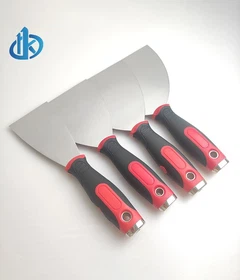
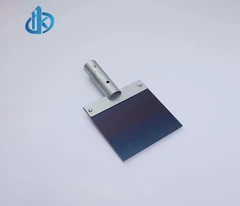

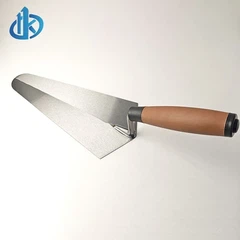

Hollow ground edges are all about making specific jobs easier-they're not just a "fancy feature"! The main goal of that curved, hollow edge is to improve how the knife spreads, smooths, and handles materials. Let me break down the top uses, 'cause these are the reasons people seek out hollow ground edges.
First and foremost: spreading joint compound (drywall mud). This is where hollow ground edges shine the most. Joint compound needs to be spread thin, even, and smooth over drywall seams-if it's lumpy or uneven, you'll have to sand for hours later. The hollow edge's curved sides let the compound sit in the slight hollow, so you can control how much you spread without pushing too hard. The thin edge also cuts through the compound cleanly, so you don't get those messy "ridges" that regular flat blades leave. I helped a neighbor hang drywall last year, and he gave me his hollow ground knife to use-spreading the compound was so much easier than with my regular knife. No more going back to fix streaks!
Another big use: smoothing thick putties or fillers. Think wood putty for deep scratches, or spackle for bigger drywall holes. These thicker materials are hard to smooth with a regular flat blade 'cause the blade tends to "dig" into the putty or leave clumps. The hollow ground edge glides over the top of the putty, pressing it into the hole without messing up the surface. I used mine to fix a big chip in my wooden bookshelf-with the hollow edge, I spread the wood putty in one go, and it dried perfectly flush with the shelf. A regular knife would've left a bump I'd have to sand down.
They're also great for working on uneven surfaces. If you're smoothing putty over a slightly warped piece of wood or a drywall seam that's not perfectly straight, the hollow ground edge's flexibility helps it conform to the surface. The curved blade can follow the contour of the surface, while a regular flat blade would skip over the dips or push too hard on the bumps. My cousin uses one for refinishing old furniture-she says it's a lifesaver for smoothing putty over curved wooden legs, which a regular knife can't handle without leaving marks.
And one small but handy use: cleaning excess material. If you have extra joint compound or putty on the edge of a surface (like a drywall corner), the thin hollow edge lets you scrape it off cleanly without scratching the surface. A regular knife's thicker edge might leave a little residue, but the hollow edge cuts through it neatly.
So to put it simply: hollow ground edges are for jobs that need precision, even spreading, and smooth results-mostly working with thick materials like joint compound or putty, especially on surfaces that need a flawless finish.


