



Which Four Types of Scrapers You Must Know?
In the diverse fields of construction, decoration and handicraft making, scrapers, as a widely used type of tool, can be further divided into different types.
Each of them, with its unique design, caters to various needs. Among them, four types are particularly typical and can be regarded as the "capable generals" in the industry.
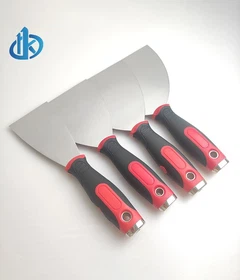
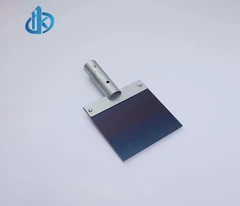
Firstly, the flat-blade scraper has a straight and flat cutting edge, which is simple yet practical. During wall treatment, whether it is to remove the old wall covering or initially level the newly applied putty, the flat-blade scraper can work efficiently with its large, flat blade surface.
When initially leveling the walls of a large new house, workers can hold the flat-blade scraper and push it steadily along the wall to quickly remove protrusions and fill in depressions, laying the foundation for subsequent fine procedures.
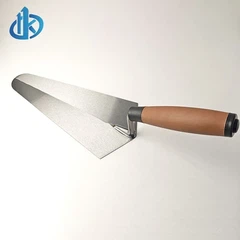
The triangular scraper has a sharp triangular cutting edge. This unique shape makes it extremely advantageous when cleaning corner gaps. In woodworking, if there is excess glue or wood residue at the mortise and tenon joints, the sharp point of the triangular scraper can accurately penetrate into the gaps to completely remove the impurities, ensuring a tight connection of the mortise and tenon and guaranteeing the structural stability of the furniture.

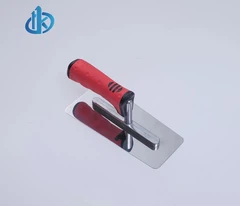
The curved scraper, as its name implies, has an elegant curved cutting edge. It shines brightly in the fields of automobile repair and metal grinding.
When there is a dent on the car body that needs to be repaired, using the curved scraper to apply filling material can perfectly fit the curved surface of the car body, evenly fill in the pits and hollows, and after subsequent grinding, the car body can be restored to its original state, smooth and shiny.
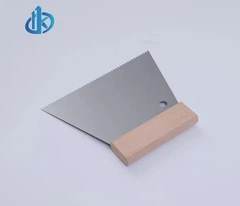
There is also the serrated scraper, which is covered with regular serrated structures on the blade.
In the industrial coating process, it can evenly scrape out specific textures, making the paint adhere more firmly.
For example, in the surface coating of large mechanical equipment, when the serrated scraper passes by, it leaves uniform serration marks, and the paint distributes along the marks, greatly enhancing the durability and protective performance of the coating.
Whether it is professionals pursuing the ultimate in craftsmanship or ordinary enthusiasts attempting DIY creations, understanding these four types of scrapers and their uses can enable them to accurately select the right tools when facing various projects, embark on a high-quality creation journey, and make each operation twice as effective with half the effort.


