
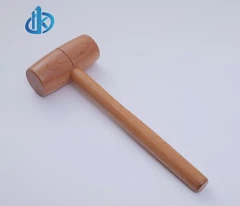


In the field of architectural decoration, all kinds of tools play unique roles. And the wooden mallet is attracting more and more attention and favor from professionals in the industry due to its numerous advantages.
The wooden mallet has natural advantages when it comes to striking operations.
Compared with metal mallets, it has a relatively soft texture.
When installing or adjusting the position of some fragile decorative materials that are prone to leaving marks, such as wooden carved panels and thin stone slabs, the wooden mallet can apply appropriate force while minimizing the damage like pits and cracks on the surface of the materials caused by excessive striking force, which well guarantees the integrity and aesthetics of the decorative materials.
This is crucial for projects that pursue high-quality decorative effects.
From the perspective of user experience, the wooden mallet is usually more comfortable to hold.
Its wooden handle fits the shape of the human hand, and it won't make the construction workers feel overly tired or uncomfortable in their hands even after long-term use, which helps improve construction efficiency.
Especially in some large architectural decoration projects that require frequent use of mallet tools for striking operations, this advantage is particularly prominent.
In addition, the wooden mallet has the characteristic of being environmentally friendly.
Nowadays, the architectural decoration industry is increasingly emphasizing the concept of green environmental protection. Wood materials themselves are degradable and renewable.
Choosing a wooden mallet is also in line with the development trend of the industry. Moreover, its processing and manufacturing process is relatively environmentally friendly and won't cause chemical pollution problems that are difficult to deal with like some plastic products.
Furthermore, the wooden mallet has more possibilities in terms of shape. It can be made into various shapes and sizes according to different usage scenarios and decorative style requirements, so as to better meet the diverse striking tasks in the process of architectural decoration construction.
For example, some are small and delicate and are used for adjustments in details, while others are larger in size and are suitable for gently tapping and positioning heavier objects.


It can be said that the wooden mallet is becoming a powerful helper in the hands of many construction workers in the field of architectural decoration with its unique advantages, helping to create more high-quality and beautiful decorative works.


