
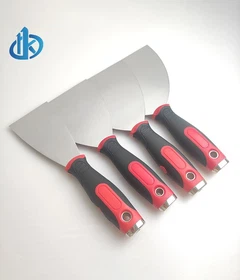
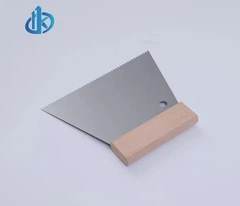
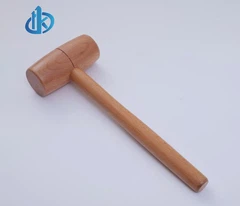


If you've ever watched a plasterer at work, you might have noticed they don't just use one trowel-they've got a whole collection, each with a specific job to do. Plastering is a craft that demands precision, and like a painter with their brushes, a plasterer relies on different tools to create that smooth, flawless finish. Let's take a closer look at the various types of plastering trowels, each with its own personality and purpose.
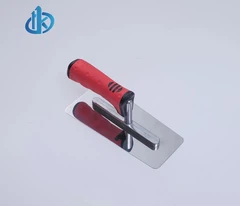
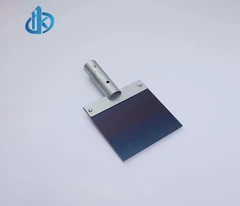
First up is the finishing trowel-the rockstar of the bunch. This is the trowel you'll see plasterers using for the final pass, the one that turns a rough coat of plaster into a surface so smooth you could almost use it as a mirror. It's usually around 11 to 14 inches long with a flat, rectangular blade made of polished steel. The polish isn't just for show; it helps the trowel glide over wet plaster without sticking, like a skater gliding over ice. Finishing trowels often have a wooden or rubber handle, shaped to fit comfortably in the hand during those long, repetitive strokes. Think of it as the fine-tip pen in a writer's toolkit-perfect for adding those final, precise touches.
Then there's the hawk trowel, though technically, a hawk isn't a trowel itself but a trusty sidekick. It's a flat, square or circular board with a handle on the bottom, used to hold a pile of plaster while the plasterer works. The plasterer scoops plaster from the hawk onto their finishing trowel, like a chef scooping batter from a bowl onto a pan. Hawks are usually made of aluminum or plastic, lightweight enough to hold for hours without tiring the arm. Without a hawk, a plasterer would be running back and forth to the plaster bucket every 30 seconds-hardly efficient. It's the unsung hero, the stage that lets the other tools shine.
Gauging trowels are the small but mighty members of the family. These are compact, usually 4 to 6 inches long, with a pointed or rounded blade. They're designed for mixing small amounts of plaster or "gauging" it-adding lime or other additives to get the perfect consistency. Gauging trowels are also great for getting into tight spots, like corners or around window frames, where a larger trowel can't reach. They're like the tweezers in a toolbox-small, but indispensable for delicate work. I've seen plasterers use them to tuck plaster into tiny gaps, ensuring no spot is left unsmoothed.
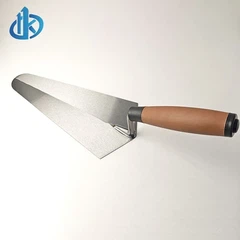
Bucket trowels are the workhorses, built for heavy lifting-literally. With a thick, sturdy blade and a strong handle, they're used to scoop plaster from the mixing bucket onto the hawk. Their blades are often curved slightly, making it easier to scrape every last bit of plaster from the bucket, like a spatula getting the last of the cake batter. Bucket trowels are usually made of tough materials like carbon steel, able to withstand the rough and tumble of daily use. They're not pretty, but they're reliable-like that old pickup truck that never lets you down.
For those tricky corners, there's the corner trowel, which we touched on earlier, but it's worth mentioning again in the context of plastering. These have two blades meeting at a 90-degree angle, perfect for smoothing plaster where two walls meet. Without a corner trowel, plastering corners is a nightmare-you end up with lumps on one side and gaps on the other. It's like trying to tie a bow with one hand; possible, but frustrating. Corner trowels make the job look easy, creating crisp, clean edges that blend seamlessly into the rest of the wall.
Edging trowels are similar to corner trowels but designed for straight edges, like where a wall meets a ceiling or a floor. They have a narrow, flat blade with one rounded end, ideal for smoothing plaster along these lines without damaging the adjacent surface. Imagine trying to paint a straight line without painter's tape-messy. An edging trowel is like that painter's tape, guiding the plaster into a neat edge without straying. They're especially useful for plastering around door frames, where precision is key to making the finished wall look professional.
Pattern trowels are the artists of the group, used to create decorative textures in plaster. These have blades with ridges, bumps, or other patterns that leave an impression in the wet plaster-think stippled, swirled, or even geometric designs. Pattern trowels are popular in historic homes or for adding a unique touch to a feature wall. They turn plain plaster into art, like a stamp turning a blank piece of paper into a postcard. Using a pattern trowel takes skill-you have to work quickly before the plaster dries, but the results are stunning.
Finally, there's the plasterer's float, sometimes called a "darby." This is a larger, flat tool, often made of wood or foam, used to level large areas of plaster before the finishing trowel comes in. It's like a giant ruler, smoothing out ridges and ensuring the plaster is applied evenly across the wall. Floats are especially useful for the first coat of plaster, called the "scratch coat," where the goal is to create a flat base for the final coat. They're not as precise as finishing trowels, but they set the stage for a perfect finish.
Each type of plastering trowel has its own role to play, and a skilled plasterer knows exactly when to reach for which one. It's a bit like a symphony-each instrument has a part to play, and together, they create something beautiful. Whether it's the finishing trowel adding the final polish or the bucket trowel doing the heavy lifting, every trowel is essential. So the next time you see a plasterer's toolkit, take a moment to appreciate the variety-each one is a testament to the craft, a tool shaped by years of experience to make the impossible look easy.
Our Products


