




What are the two types of mallets?
[Linyi, China] In the world of woodworking, choosing the right striking tool is essential. Many craftsmen often ask, "What are the two types of mallets?" Though a simple question, it reflects a deep understanding of impact control and material suitability. Generally, mallets are categorized into two types: wooden and rubber. The former is widely used in joinery and carving, while the latter is often applied to gentle assembly work.
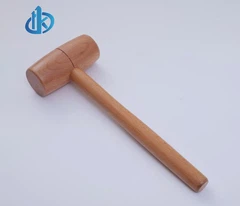
Wooden mallets are the timeless companion of woodworkers. Hanke Tools, with over 30 years of experience in hand tool manufacturing, produces its mallet line primarily from beech and birch wood. Each piece is carefully sanded and polished to ensure a smooth finish and solid strike feedback. Beech mallets are known for their hardness and resistance to impact, while birch mallets offer moderate weight and fine grain texture, suitable for extended use. Unlike one-piece mallets, Hanke's mallets feature a joined mortise-and-tenon construction, allowing both durability and easy maintenance.
Although Hanke Tools does not manufacture rubber mallets, it acknowledges their place in lighter tasks such as tile, furniture, or metal assembly. By contrast, Hanke's wooden mallets are designed for precision woodworking applications-delivering focused power with excellent rebound control. These products are particularly popular among craftsmen across Europe and North America, where hand craftsmanship remains highly valued.

Since its founding, Hanke Tools has upheld a commitment to "quality above all." Each mallet undergoes multiple inspections before shipment, including wood grain selection, handle balance calibration, and striking stability tests. This attention to detail ensures consistent performance under varying environmental conditions.
With the revival of traditional woodworking in Western markets, more artisans are rediscovering the balance between "feel" and "accuracy." Understanding the two main types of mallets helps professionals choose the right tool for their projects. Hanke reminds users that even a simple tool like a mallet relies heavily on its material, weight, and joint design for achieving the best workmanship.
Looking ahead, Hanke Tools will continue refining its beech and birch mallet lines, improving durability and ergonomics. The company remains devoted to its mission-crafting every mallet with precision and passion, allowing Chinese-made tools to shine in workshops around the world.


