
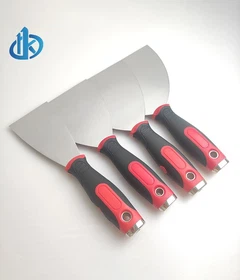
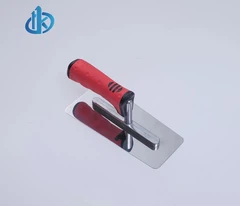
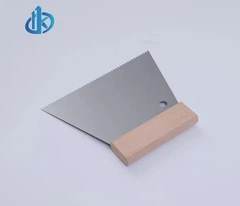
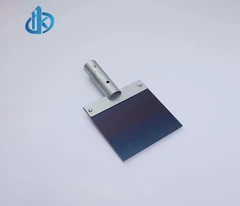

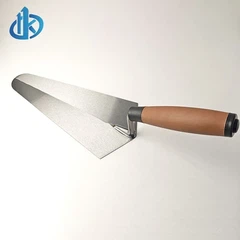

In the field of architectural decoration, a taping knife is a commonly used and versatile tool that plays a crucial role in the treatment of walls and ceilings.
One of the primary uses of a taping knife is for the joint sealing treatment of walls and ceilings.
During construction, the joints between gypsum boards need to be filled and processed to ensure a smooth and seamless surface. The taping knife can evenly apply the joint sealing material to the joints, allowing it to fully fill the gaps.
Then, through the leveling operation of the taping knife, the joints can be made flush with the surrounding surface, laying a good foundation for subsequent decoration work.
It can also be used for applying putty. When the surface of a wall or ceiling is uneven, putty needs to be used for repair and leveling. The taping knife can precisely apply the putty to the areas that need to be treated.
By adjusting the angle and force during operation, the putty layer can be made more uniform and smooth, effectively improving the flatness and smoothness of the wall surface.
In addition, the taping knife also plays an important role when applying decorative coatings and textured materials. For some special decorative effects, such as imitation stone patterns and roughcasting, a taping knife is required to create unique textures and finishes.
By controlling the movement and force of the taping knife, various different decorative effects can be created to meet the needs of designers and homeowners for personalized decoration.


In the field of architectural decoration, the taping knife, with its multiple uses in joint sealing, putty application, and decorative treatment, has become an indispensable and powerful tool for construction workers.
With the continuous development of architectural decoration technology, the design and functions of the taping knife are also constantly being improved and innovated, providing strong support for enhancing the quality and efficiency of architectural decoration.


