
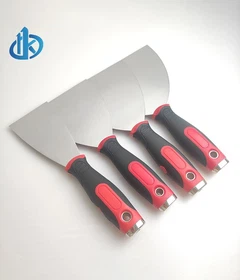



Versatile Applications of Flexible Scrapers: A Cross-Industry Tool from Industrial Maintenance to Artistic Creation
In the field of surface treatment tools, flexible scrapers are gaining cross-industry popularity due to their unique adaptability. Latest market research shows that this traditionally perceived "small renovation tool" has broken through application boundaries, demonstrating remarkable potential in industrial maintenance, precision manufacturing, artistic creation, and other fields.
I. The Flexible Revolution in Industry
In aerospace maintenance workshops, flexible scrapers have become a key tool for composite material repairs. Their elastic blades perfectly conform to aircraft curves, removing cured adhesive layers without damaging carbon fiber substrates.
A manufacturing engineer explained: "When treating wing leading edges, rigid tools often cause micro-cracks, while flexible scrapers enable millimeter-precise stripping."

II. Gentle Power in Cultural Heritage Preservation
Ancient architecture restoration teams have recently incorporated flexible scrapers into their standard toolkit. The polyurethane blade can remove oxidation layers from antique lacquerware while preserving the original lacquer film. "This 50-yuan tool has helped us solve cleaning challenges for priceless cultural relics," said Professor Li, a senior restorer.
III. Unexpected Delight in Artistic Creation
The "flexible scraper painting technique" has attracted attention in the art world. By controlling the blade's curvature, artists can create unique textures ranging from watercolor-like translucency to oil-painting-like thickness. The artwork Flowing Boundaries, entirely created with scrapers, fetched an astonishingly high price at auction.
According to the Hardware Products Association, the professional flexible scraper market is projected to grow at over 25% annually. This seemingly simple tool is writing a cross-industry legend from workshops to art galleries.


