
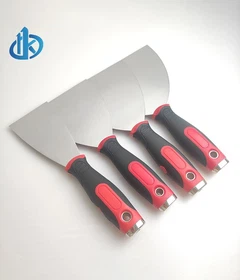
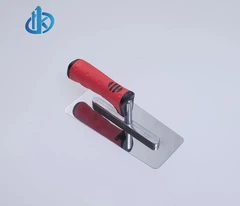
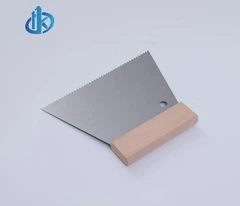
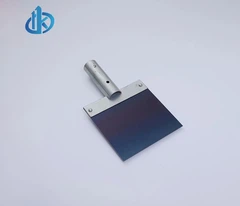

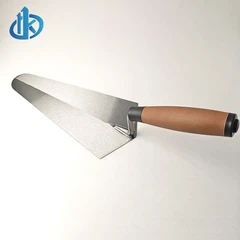

A plasterer's trowel goes by several names, each highlighting its specific function or design. Commonly, it's simply called a "plaster trowel," a broad term that encompasses all trowels used in the plastering trade. However, within this category, there are more specialized monikers.
For instance, a "finishing trowel" is designed specifically for that final, smooth coat of plaster. Its smaller, often more flexible blade allows for precision work, creating a surface that's ready for painting or wallpapering. Another type is the "venetian trowel," known for its rounded corners and high - quality stainless - steel construction.
This trowel is ideal for achieving a polished, marble - like finish on plaster, as the rounded edges prevent scratching and help in creating a smooth, glossy surface. There are also "square trowels," which are the basic workhorses in plastering.
Rectangular in shape with sharp corners, they're used for applying base layers and some top layers of plaster, and are the most common type you'll see on a job site. Then there are niche ones like "notched trowels," recognized by the horizontal notches on their blades. These are mainly used for applying thin - set mortar in tile work but can also find use in certain plaster applications where a specific texture or consistent material spread is required.
brick trowel from hanke


