
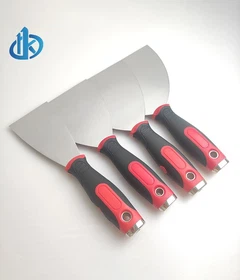
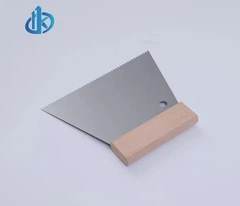
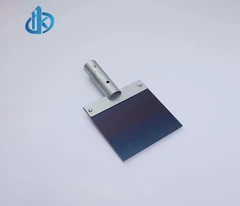

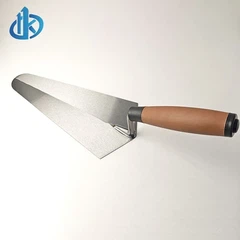

If you've ever stumbled upon a tool that looks like a metal rectangle with a weirdly shaped handle, chances are you've met a tang scraper. Let me paint a picture: it's got a flat, sharp blade-usually made of high-carbon steel-and a handle that juts out from one end, almost like a tail. That "tail" is called the tang, and it's what gives this scraper its name.
So, what makes it special? Unlike regular scrapers that you hold flat, the tang lets you grip it like a pencil, giving you pinpoint control. Last summer, I was restoring an old wooden chair with intricate carvings. The nooks and crannies were caked with grime, and my regular scraper just couldn't reach. Then I found my dad's tang scraper, and suddenly, I was cleaning those tiny crevices like a pro. It's like having a scalpel for wood-precise, nimble, and totally satisfying to use.
Tang scrapers are woodworkers' best-kept secret. They're perfect for smoothing curved surfaces, like the arm of a rocking chair or the inside of a wooden bowl. The sharp blade shaves off thin layers of wood, leaving a finish so smooth it feels like silk. But here's the catch: they're not for heavy-duty scraping. Try removing paint with one, and you'll wear out the blade faster than a kid goes through ice cream on a hot day.
Think of it this way: a tang scraper is the ballerina of the tool world-graceful, precise, and made for delicate moves. It might not be the first tool you grab, but when you need finesse, nothing else compares. Once you use one to restore a vintage piece, you'll wonder how you ever managed without it.


