
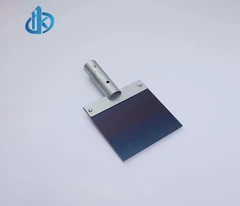

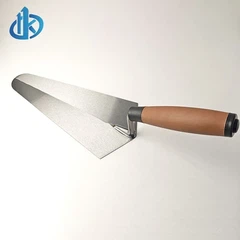


What is the best angle for a scraper?--Focus from a Chinese professional hand tool manufacturer on construction efficiency
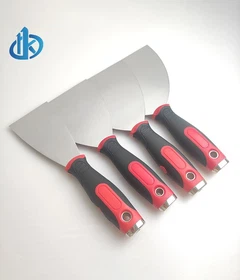
In floor cleaning and wall repair projects, workers often face a practical question: What is the best angle for a scraper? The angle of use directly affects cleaning efficiency, material removal, and work safety, making it a key concern for construction teams and tool designers.
Experts note that maintaining a proper tilt during scraping prevents damage to the substrate while ensuring even material removal. Surfaces with different materials and hardness require angle adjustments to handle cement, paint, adhesives, and other construction residues effectively.
At Hanke Tools Co., Ltd. in Linyi, the R&D team has optimized blade thickness, material hardness, and handle design based on market feedback and field experience. With these improvements, operators can naturally maintain the ideal angle, improving cleaning efficiency and reducing hand fatigue.

Market research shows that professional teams in Europe and North America emphasize standardized operation, maintaining a fixed angle for consistent results. In Asia, workers often adjust angles based on experience to suit various materials and site conditions. Regardless of approach, the importance of scraper angle is widely recognized.
Thus, in practice, workers frequently ask: What is the best angle for a scraper? Mastering the correct operating angle, combined with high-quality scrapers, is essential for ensuring efficiency and achieving consistent results, and is a key focus in construction training.
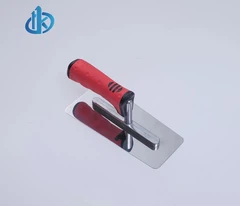
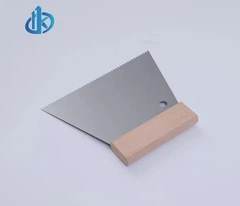
As a professional hand tools manufacturer, Hanke Tools Co., Ltd. has focused on quality and innovation for over three decades. By continuously refining scraper and trowel designs, Hanke provides durable, easy-to-use, and high-efficiency tools to global construction teams, helping improve overall project quality.


