



What is the difference between a drywall taping knife and a joint knife?
In drywall construction, "What is the difference between a drywall taping knife and a joint knife?" is a common question among professionals and DIY enthusiasts. Though similar in appearance, the two tools serve distinct functions, and correctly distinguishing them improves efficiency and final results.
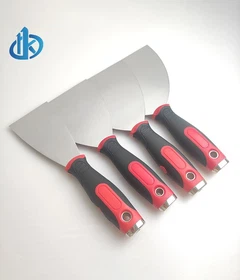
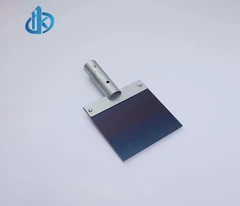
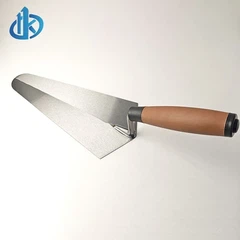
A drywall taping knife typically has a wider blade, suitable for embedding joint tape and initially smoothing wall seams. Its flexible blade allows for smooth application of compound, minimizing bubbles and scratches while ensuring the tape adheres closely to the wall.
The joint knife, by contrast, has a narrower and stiffer blade, primarily used to fill and refine compound at seams and to address small imperfections. It emphasizes precise control over compound thickness and edge shaping, making it an essential tool for detail work.

In practice, both knives are often used together: first, the taping knife spreads the tape smoothly, followed by the joint knife for local touch-ups to achieve a seamless finish. Hanke Tools, with years of manufacturing experience, provides a variety of widths and materials to suit different construction stages.
Choosing high-quality tools is crucial for optimal results. Hanke Tools' products use blue steel or stainless steel, balancing durability with ease of use, and have been widely praised in Europe, the Middle East, and other export markets.
With growing demands for refined finishes, understanding and appropriately using drywall taping knives and joint knives forms the foundation of quality construction. Hanke Tools remains committed to providing reliable and professional drywall solutions.


