




Perspective from a Chinese Factory | Professional Hand Tool Manufacturer Explains the Difference Between Hammer and Wooden Mallet
In woodworking and construction, people often ask: "What is the difference between a hammer and a wooden mallet?" This is not just a matter of terminology but also relates to usage scenarios and craftsmanship requirements. As an experienced Chinese manufacturer, Hanke Tools has always focused on distinguishing the functions of different tools in practical applications.
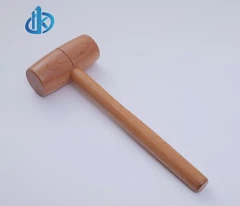
Hammers are usually made of metal, with concentrated weight, suitable for driving nails or demolition work, delivering strong and direct force. Wooden mallets, however, are crafted from hardwood such as beech or oak. They provide gentler strikes, often used in woodworking, carving, or mortise-and-tenon joints, without leaving marks on the material surface.
Structurally, a hammer's head is dense and hard, capable of withstanding heavy impacts, while a mallet's head is wider and softer in force delivery, protecting delicate materials. Though both are striking tools, their design logic and applications differ greatly.

Different trades also dictate the choice. Construction workers rely heavily on hammers for heavy-duty tasks, while furniture makers and carvers prefer mallets to achieve precision and maintain aesthetics. These differences give each tool an irreplaceable role in its field.
On job sites, workers often revisit the question: "What is the difference between a hammer and a wooden mallet?" Such discussions reflect the concern for proper tool usage.
Hanke Tools, responding to market needs, continues to supply a variety of hammers and mallets, helping users choose the right tool for each scenario.
As a source factory, Hanke Tools insists on quality first, strictly controlling every step from raw material selection to finished product testing. Whether hammer or mallet, Hanke Tools remains a trusted partner for professionals worldwide.


