
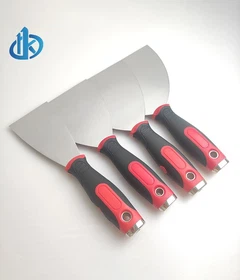
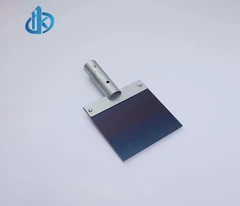

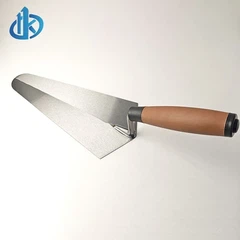

When it comes to stainless steel putty knives, the 301 and 201 grades have several differentiating factors.
Composition:
The 201 stainless steel contains a significant amount of manganese and nitrogen, along with around 16-18% chromium. This composition gives it a reasonable level of corrosion resistance suitable for many common household and light industrial applications.
The 301 stainless steel has a higher nickel content compared to 201. The addition of nickel enhances its formability and ductility. It also contains chromium in a range that provides good corrosion resistance, typically around 16-18% as well.
Mechanical Properties:
In terms of strength, the 301 stainless steel is generally stronger and has better tensile properties. This makes it more suitable for applications where the putty knife may need to endure some bending or flexing without deforming easily. For example, when working on uneven surfaces or applying pressure at an angle.
The 201 stainless steel is relatively softer and more malleable. It is easier to shape during the manufacturing process, which can result in a more precise and smooth blade edge for fine putty work.
Corrosion Resistance:
The 301 stainless steel offers better corrosion resistance in more demanding environments. It can withstand exposure to moisture, mild chemicals, and some acidic substances better than 201. This is beneficial if the putty knife is used in areas with higher humidity or where it may come into contact with substances that could cause rust or corrosion.
The 201 stainless steel is sufficient for most indoor and less corrosive conditions but may show signs of discoloration or corrosion over time in harsher environments.
Cost:
201 stainless steel putty knives are usually more cost-effective as the raw material cost is lower due to its simpler composition. The 301 grade, with its enhanced properties, is likely to be priced slightly higher.
In conclusion, the choice between 301 and 201 stainless steel putty knives depends on the intended use. If you need a more durable and corrosion-resistant option for tougher jobs, 301 may be the better choice. For lighter tasks and cost considerations, 201 can be a suitable alternative.


