
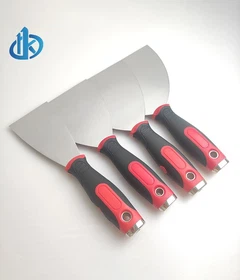
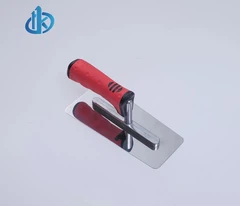
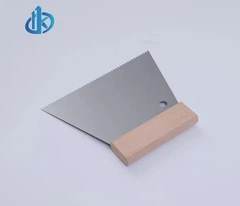
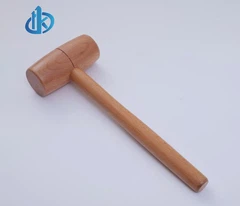


In the realm of plastering and finishing work, plaster trowels are not just defined by their sizes but also by their distinct shapes, each serving a unique purpose and contributing to the overall quality and aesthetics of the plastered surface.
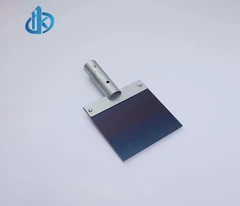
The most common and widely recognized shape is the rectangular trowel. This classic form is available in a variety of widths and lengths. The rectangular trowel is a versatile workhorse, suitable for general plaster application and smoothing. It allows for efficient spreading of plaster over large areas, whether it's on walls or ceilings. The straight edges of the rectangle make it easy to create flat and even surfaces, and with proper technique, it can be used to achieve a smooth finish. It is the go-to shape for many basic plastering tasks in both residential and commercial construction projects.
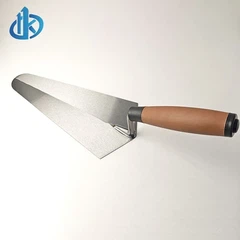
Another popular shape is the pointed trowel. As the name suggests, it has a pointed tip. This shape is invaluable when working in corners and edges. The pointed end enables precise application and finishing of plaster in tight and hard-to-reach areas such as the intersection of walls and ceilings or around intricate architectural details. It gives the plasterer greater control and accuracy, ensuring that the plaster is neatly and evenly applied in these critical spots, enhancing the overall look and integrity of the plasterwork.
The curved trowel is yet another shape that has its own set of applications. The curved edge can be convex or concave. A convex curved trowel is often used for creating rounded or domed surfaces. It is commonly employed in decorative plastering, for example, when forming arches or ornamental columns. The curvature of the trowel helps to shape the plaster in a smooth and continuous arc, adding an element of elegance and sophistication to the design. On the other hand, a concave curved trowel is useful for scooping and spreading plaster in a more controlled manner, especially when working with small amounts or in confined spaces where a traditional rectangular trowel might be too bulky.
The notched trowel is a specialized shape that plays a crucial role in certain plastering techniques. It has teeth or notches along one or both edges. This type of trowel is primarily used for applying adhesives or thin-set mortars when laying tiles or other wall and floor coverings. The notches help to create a uniform thickness and texture of the adhesive, ensuring proper bonding and leveling of the tiles. It is an essential tool for any tiling project and comes in different notch sizes to accommodate various tile sizes and installation requirements.
In recent years, there has been an emergence of more innovative and hybrid shapes of plaster trowels. Some trowels combine features of multiple traditional shapes, such as a rectangular trowel with a rounded corner or a pointed tip added for added versatility. These new designs are aimed at meeting the evolving needs of modern construction and design trends, allowing plasterers to achieve more complex and unique finishes with greater ease.
In conclusion, the different shapes of plaster trowels offer a wide range of options for professionals and DIY enthusiasts alike. Understanding the characteristics and applications of each shape is essential for achieving high-quality plastering results. Whether it's creating a seamless flat wall, adding decorative details, or laying tiles, the right trowel shape can make all the difference. As the field of construction and interior design continues to progress, we can expect to see further refinements and new introductions in the shapes of plaster trowels, opening up even more possibilities for creative and efficient plastering work.


