





Exploring the Secrets of Popular Brick Trowels: Diverse Features and Segmented Audiences
In the field of construction, brick trowels are the right-hand tools for masons. The diversity in their design and materials caters to the needs of different users. Recently, a study on the brick trowel market has revealed the characteristics of popular trowels and the corresponding audience groups for different types of trowels.
Material Determines Durability and Applicability
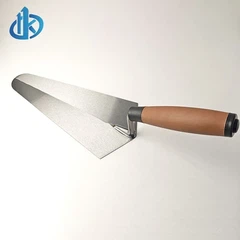
In terms of materials, stainless-steel brick trowels are highly favored. Stainless steel has excellent corrosion resistance. Even in a humid working environment where it frequently comes into contact with corrosive materials such as cement and mortar, it is not easy to rust or get damaged, which greatly extends its service life. For professional masons who work on construction sites for a long time and use tools extremely frequently, stainless-steel trowels are sturdy and durable, reducing the trouble of frequent tool replacement and serving as a reliable choice to improve work efficiency.
In contrast, trowels with wooden handles attract specific users with their unique texture. Handles are usually made of woods such as oak and beech, which are hard in texture and have beautiful grains. They not only provide a comfortable grip but also have a certain shock-absorbing effect, reducing the fatigue caused by holding the tool for a long time.
Such trowels are quite popular among DIY enthusiasts. When they carry out small home improvement bricklaying projects, they pay more attention to the comfort of operation and the user experience brought by the tool.
Shape Design Caters to Different Work Requirements
The shape design of trowels also affects their popularity. Round-headed trowels have unique advantages. Their rounded heads can spread mortar more evenly when applying it. Moreover, when dealing with some brick surfaces with large curvatures or when fine-tuning the mortar, the round-headed design can better fit the surface, achieving a smooth transition and avoiding edges, corners, or unevenness.

Square-headed trowels, with their simple and straightforward design, show high efficiency in large-scale bricklaying operations such as regular wall construction. The square head can quickly apply mortar over a large area, and when laying bricks, it is convenient to accurately align the edges of the bricks, ensuring the verticality and flatness of the wall.
Size Meets Different Work Scenarios
Size is also a key factor affecting the popularity of trowels. Small trowels generally have a width of about 5 - 8 centimeters. They are small and flexible, suitable for use in narrow spaces or for fine bricklaying work. For example, in interior decoration, when installing small decorative bricks or repairing corner gaps, small trowels can operate precisely, avoiding unnecessary impact on the surrounding area.
Large trowels can be as wide as 15 - 20 centimeters or even wider. Their large working surface can apply a large amount of mortar at one time, greatly improving work efficiency. In the wall construction of large commercial buildings and high-rise buildings, large trowels can meet the needs of rapid and large-scale bricklaying, making them the first choice for construction contractors and large construction teams.
Due to differences in characteristics such as materials, shapes, and sizes, brick trowels attract different audience groups. Whether they are professional construction personnel or DIY enthusiasts, they can find the most suitable brick trowel according to their own work needs and preferences. This also promotes the diversified development of the brick trowel market to better serve all fields of the construction industry.


