
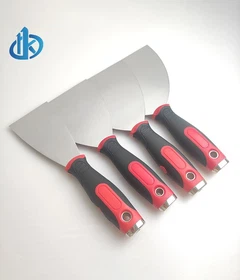
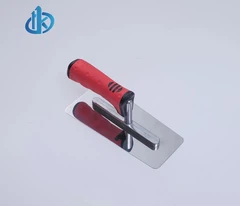



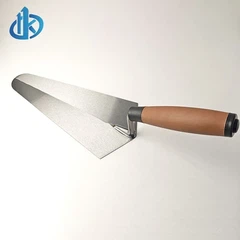

A plaster trowel's hardness is a crucial factor that determines its performance and durability. The normal hardness of a plaster trowel typically falls within a specific range.
Most plaster trowels are made from materials such as carbon steel or stainless steel. For carbon steel plaster trowels, the hardness is often around HRC 45 - 55 on the Rockwell hardness scale. This level of hardness provides a good balance between toughness and the ability to hold a sharp edge. It allows the trowel to effectively spread and smooth plaster without deforming easily. The carbon steel's hardness is achieved through appropriate heat treatment processes, which involve heating and cooling the metal in a controlled manner to enhance its mechanical properties.
Stainless steel plaster trowels, on the other hand, usually have a slightly lower hardness, generally in the range of HRC 35 - 45. While they may not be as hard as their carbon steel counterparts, they offer better corrosion resistance. This makes them suitable for use in environments where there is a risk of moisture or exposure to certain chemicals. The lower hardness also means they are somewhat more ductile, reducing the likelihood of chipping or cracking during use.
The normal hardness of a plaster trowel is carefully designed to meet the demands of plastering work. If the trowel is too hard, it may become brittle and prone to breaking, especially when subjected to sudden impacts or excessive force. Conversely, if it is too soft, it will not be able to effectively level and smooth the plaster surface, resulting in an uneven finish.
In conclusion, understanding the normal hardness of a plaster trowel helps both professionals and DIY enthusiasts select the right tool for the job, ensuring efficient and high-quality plastering results.
Our Products


