


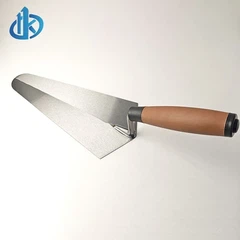

The origin of plastering trowels dates back to ancient times when humans first began to construct permanent shelters.
In early civilizations, such as the Egyptians, Greeks, and Romans, the use of plaster for both structural and decorative purposes was prevalent. The need to apply and finish plaster led to the development of primitive trowel-like tools. These were likely made from materials such as stone, bone, or wood, with a flat or slightly curved surface to spread and smooth the plaster.
As time passed and metalworking techniques advanced, trowels began to be made from bronze and then iron. This transition provided greater durability and better performance. The shape and design of the trowels also evolved to better suit the specific requirements of plastering different surfaces and achieving various finishes.
During the Middle Ages and the Renaissance, with the flourishing of architecture and construction, the demand for more refined plastering work increased. This led to further refinements in trowel design, with different sizes and shapes being developed to handle intricate details, large wall surfaces, and ornamental plasterwork.
In the industrial era, the mass production of plastering trowels became possible, making them more widely available and affordable. Modern manufacturing processes have since allowed for the use of high-quality steel and other advanced materials, further enhancing the performance and longevity of these tools.
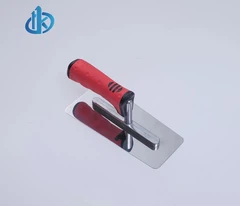
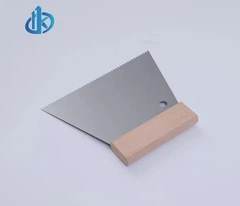
Today, plastering trowels come in a vast array of designs, from traditional flat trowels to those with specialized features like teeth for texturing or bevelled edges for precise finishing. Their origin lies in the fundamental human need to create durable and aesthetically pleasing living and working spaces, and they continue to be an indispensable part of the construction and renovation industries.
Our Products


