
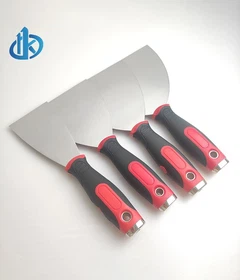
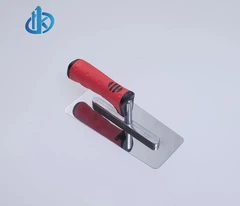
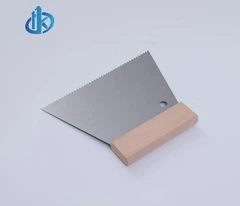


Ever looked at a perfectly smooth wall and wondered how pros achieve that flawless finish? Chances are, a taping knife played a major role! If you're new to the world of DIY or construction, you might be scratching your head, asking, "What's so special about this tool?" Let's dive in and demystify it together!
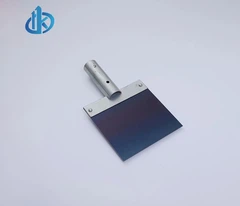
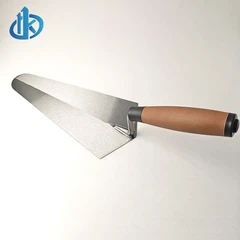
At its core, a taping knife is the unsung hero of drywall projects. Picture this: you've just installed drywall panels, but there are those pesky seams and gaps staring right at you. That's where the taping knife swoops in to save the day! Its main gig is applying drywall tape and joint compound. Think of it as a super precise spreader-like the one you use to slather peanut butter on your morning toast, but way more specialized.
The first step in a drywall job is getting that tape down. The taping knife helps you press the tape firmly onto the seams, making sure it adheres perfectly. Then, with a smooth glide, you use the knife to spread a thin layer of joint compound over the tape. It's all about getting that even coat, and the flexible blade of the taping knife makes it a breeze.
But the work doesn't stop there! Taping knives are also key for feathering out the compound. You know how artists blend colors on a canvas? Similar idea here! You use the knife to spread the compound thinly beyond the seam, gradually blending it into the surrounding drywall. This process eliminates any bumps or ridges, leaving you with a surface that's as smooth as silk.
And here's the cool part: taping knives aren't just for drywall. They come in handy for all sorts of tasks, like filling small holes with spackle or spreading putty for window glazing. Next time you embark on a home improvement project, don't forget to add a taping knife to your toolkit. Trust me, it'll become your new best friend!


