
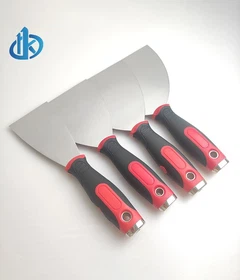
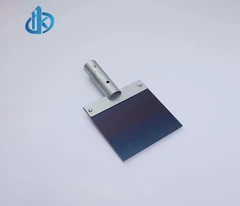

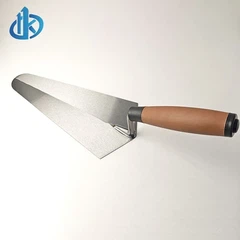

First off, let's clear up a myth: a lot of people think they're the same, but there are small differences that matter! Let's start with what they're made for-because that's where the differences start.
A spackle knife is designed specifically for small patching jobs: nail holes, tiny dents, spreading spackle (which is thinner and easier to spread than putty). High-quality spackle knives usually have smaller blades (1-3 inches) and a more flexible blade. Why? Because spackle needs to be spread thin, and a flexible blade helps you smooth it out without leaving streaks. I have a 2-inch Hyde spackle knife that I use for nail holes-it's flexible enough to feather spackle into the wall, so the patch blends right in. Spackle knives also often have narrower handles, since you're doing precise work with small hands movements.
A high-quality putty knife is more versatile-it's for bigger jobs: drywall repairs, spreading wood putty (thicker than spackle), scraping paint, even spreading adhesive. Putty knives have thicker, stiffer blades (usually 3-6 inches) because they need to handle thicker materials. My 4-inch Warner putty knife has a stiff blade that I use to pack wood putty into cracks-something a flexible spackle knife couldn't do without bending. Putty knives also have more ergonomic handles, since you might use them for hours on bigger projects.
Another difference is the edge: spackle knives have a super sharp, thin edge to spread thin spackle evenly. Putty knives have a slightly thicker edge that can handle scraping and pushing thick materials without dulling. I tried using my spackle knife to scrape old paint once-it dulled the edge in 5 minutes. My putty knife? I've scraped paint a dozen times, and the edge is still sharp.
But here's the good news: a high-quality putty knife can do everything a spackle knife can do (just use a small size!), but a spackle knife can't do everything a putty knife can. If you have a 2-inch putty knife, you can patch nail holes like a pro. But if you only have a 2-inch spackle knife, you can't scrape paint or spread wood putty.
I have both, but I use my putty knife way more. The only time I grab the spackle knife is for tiny nail holes-otherwise, the putty knife handles it all. Pros usually have both, but for DIYers? A high-quality putty knife (with a small blade option) is more useful. Just don't mix them up for big jobs-you'll end up with a dull spackle knife or a messy patch!
putty knife from hanke tools


