



Revealing the Secrets of Joint Knives and Putty Knives: The Differences and Applications of Construction Tools
In the fields of construction and renovation, the choice of tools is directly related to the efficiency and quality of work. Recently, many novice practitioners and DIY enthusiasts have raised questions about the differences between two common tools - the joint knife (Joint Knife) and the putty knife (Putty Knife). Although these two tools may seem similar, there are significant differences in their uses, designs, and functions.
In terms of usage, the joint knife is mainly used for drywall construction. When building new houses or renovating old ones, workers need to deal with the joints on the walls, and this is when the joint knife comes in handy. It can evenly apply the joint compound, ensuring that the gaps between the drywalls are tightly bonded, laying a solid foundation for subsequent wall decoration. For example, in a large - scale residential construction project, the construction team has to handle a large number of drywall joints every day. The efficient use of the joint knife has greatly accelerated the project progress.

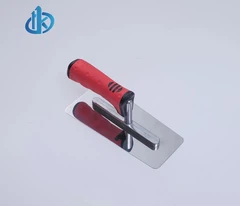
The putty knife, on the other hand, has a wider range of uses. During renovation, it can be used to scrape off impurities and dust on the wall, and also for applying putty, filling wall gaps and cracks.
In daily life, there are even teppanyaki vendors who use it to shovel food. In the renovation process of old houses, workers first use a putty knife to remove the old wall paint, and then proceed with subsequent wall repair and repainting work.
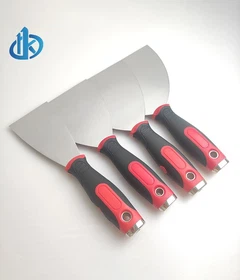
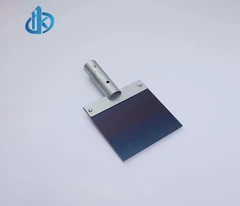
In terms of materials and design, the joint knife usually adopts a high - quality stainless - steel blade, paired with an aluminum - alloy body, ensuring that the tool remains straight while having a certain degree of flexibility.
The handle is designed ergonomically, and long - term use is not likely to cause wrist fatigue. Take the joint knife of Hanko Tools as an example. Its rubber - coated handle is not only anti - slip but also can effectively reduce hand pressure.

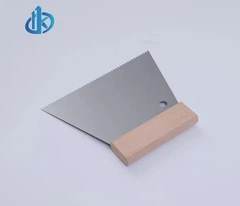
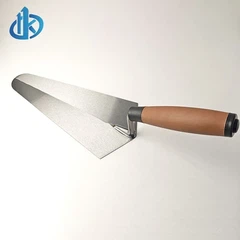
The putty knife generally has a blade made of carbon steel or stainless steel, and there are various options for the handle, such as wooden, plastic, and rubber and plastic handles.
Carbon - steel blades have a lower cost and are suitable for general household use; stainless - steel blades are more corrosion - resistant and are often used in professional construction. The putty knife with a plastic handle has an attractive appearance and a comfortable feel, while the one with a wooden handle has a more traditional texture.
In terms of size specifications, common sizes of joint knives include 6 inches, 10 inches, 14 inches, 18 inches, etc. Different sizes are suitable for the treatment of joints of different widths.
The size of a putty knife usually refers to the width of the blade of a flat - mouth putty knife. Common specifications include 1 inch, 1.5 inches, 2 inches, 3 inches, 4 inches, 6 inches, 8 inches, etc., to meet different construction needs.
Although both the joint knife and the putty knife are powerful assistants in construction and renovation, the differences in their uses, materials, designs, and sizes determine their respective applicable scenarios.
Whether you are a professional construction worker or a DIY enthusiast, when choosing tools, you should make accurate selections according to specific needs to ensure the smooth progress of work. With the continuous development of construction technology, these two tools may also continue to innovate in design and function in the future, bringing more convenience to the industry.


